
Technical guide · AirPropre expertise
3D printing fumes: beware of invisible emissions
Filament, resin, powder or metal: every 3D printing technology releases ultrafine particles, volatile organic compounds or dusts that penetrate deep into the lungs. What French, Swiss and European studies show, what the regulations require, and how to protect yourself.
Updated 11 November 2026 · 15 min read · 56 sources cited
- ultrafine particles emitted every minute by an ABS printer, ten times more than with PLA
1,9 × 10¹¹/min
ultrafine particles emitted every minute by an ABS printer, ten times more than with PLA[5, 42]
- of professional users surveyed have respiratory symptoms every week
59%
of professional users surveyed have respiratory symptoms every week[47]
- different volatile organic compounds identified during filament printing
216VOCs
different volatile organic compounds identified during filament printing[48]
01The key points in one minute
Four key messages
3D printing is now everywhere: design offices, workshops, schools, fablabs, dental laboratories and even homes. Its emissions, however, remain largely overlooked because they cannot be seen.
Invisible does not mean harmless
A filament printer can emit billions of ultrafine particles per minute without any visible smoke or noticeable odour[42]. Odour is not a reliable indicator.
All technologies emit
Filament: ultrafine particles and VOCs. Resins: VOCs and allergenic substances. Powders: fine dusts, sometimes metallic and carcinogenic. The profiles differ, but the need for protection remains[4, 22].
The risk is concentrated near the machine
Exposure is highest in an enclosed, poorly ventilated room close to open printers, and increases with the number of machines and the printing time.
The solution is known and effective
Enclose the printer, capture emissions at source, filter the air (pre-filter, HEPA and activated carbon) and ventilate the room: this is the approach recommended by occupational health and safety bodies[2, 13, 19].
40%
of the additive manufacturing machines observed in industry had no extraction connected, as did 50% in services and 25% in research: these are the findings of the INRS field survey carried out from 2016 to 2018[1, 5].
Who is affected?
- Primary and secondary schools
- Universities and laboratories
- Fablabs and makerspaces
- Design offices
- Dental laboratories
- Industrial prototyping
- Additive manufacturing production
- Home users and makers
02Emission mechanisms
How a 3D printer pollutes the air
Heating a polymer to several hundred degrees never happens without emissions. Part of the material and its additives volatilises, then condenses into particles as it cools.
The print head fans
Essential for cooling the part, they also disperse the plume into the room when the printer is not enclosed.
Finer than a virus: the size scale
Logarithmic scale (each graduation divides the size by 10). Deposition zones according to the conventions of standard NF EN 481.
- Human hair50 à 70 µm
- Printing powders (metal, polymer)≈ 15 à 90 µm
- PM10 / PM2.5 particles≤ 10 µm / ≤ 2,5 µm
- Bacterium≈ 1 à 2 µm
- Virus≈ 0,02 à 0,3 µm
- Particles emitted by a filament printermostly 10 to 50 nm
Nose, mouth, throat
inhalable fraction
Trachea, bronchi
< 10 µm
Pulmonary alveoli
respirable fraction, < 4 µm
Alveoli and possible passage into the blood
ultrafine, < 0.1 µm
During a print job
Ultrafine particle concentration in the room over time. Schematic diagram based on published measurements, not to scale.
Continuous emission
After the peak, emissions fall and then stabilise: without capture at source, the concentration in the room remains high for as long as printing continues, a few hours, sometimes several days.Capture at source
Enclosed printer and HEPA-filtered extraction: 99% fewer particles at the workstation in the benchmark Finnish study[32].After stopping
The concentration decreases only slowly: leave the extraction running for a few minutes before opening the enclosure.
03Technologies
Each process has its own emissions
Standard NF EN ISO/ASTM 52900 classifies additive manufacturing into seven process categories. Here are the most common ones, and what they release into the air.
- High
FDM · FFF · material extrusion
Filament deposition
A thermoplastic filament is melted in a heated nozzle (190 to 300 °C, higher for engineering polymers) and then deposited layer by layer.
- Emissions
- From 10⁸ to 10¹² ultrafine particles per minute depending on the filament and temperature, and hundreds of different VOCs (styrene, lactide, caprolactam, aldehydes…).[38, 43, 48]
- Critical moments
- Start of printing, styrenic and polyamide materials, open printer, several machines in the same room; sanding and solvent smoothing of parts.
- High
SLA · DLP · LCD · vat photopolymerisation
Photopolymer resin
A liquid (meth)acrylate-based resin is cured layer by layer by an ultraviolet light source.
- Emissions
- Few particles, but 4 to 7 times more organic vapours than filament according to INRS: sensitising acrylates, formaldehyde, solvents during washing; parts off-gas for weeks. Major skin risk.[1, 12, 31]
- Critical moments
- Filling and cleaning the vat, washing and post-curing parts, removing supports, contaminated waste.
- High
PolyJet · MultiJet · material jetting
Material jetting
Droplets of photopolymer resin are jetted by print heads and then cured with UV light, with a support material to be removed.
- High
SLS · MJF · powder bed fusion
Polymer powder
A polyamide powder (PA12, PA11) is fused by a laser, or by agents and an infrared lamp, in a heated chamber.
- Very high
SLM · DMLS · LPBF · EBM · binder jetting · DED
Metal powder
A metal powder (stainless steel, nickel or cobalt-chrome alloys, titanium, aluminium) is melted by a laser or electron beam, or bound by a binder.
- Emissions
- Cobalt OELs (VLEP) exceeded during finishing, respirable nickel up to 3 times the German reference value; up to 3 million particles/cm³ when a machine is opened immediately.[6, 23, 29, 35]
- Critical moments
- Opening the machine, recovering powder, depowdering, sieving, changing filters, cleaning the chamber, grinding: ancillary tasks cause more exposure than the build itself.
Hazard matrix by process
AirPropre summary based on the sources cited. The actual level depends on the materials, quantities, ventilation and work organisation.
| Process | Ultrafine particles | VOCs (gases) | Dusts and powders | CMR metals | Skin allergens | Fire, explosion |
|---|---|---|---|---|---|---|
| Filament deposition (FDM / FFF) | Very high | High | Low | Low | —Negligible | —Negligible |
| Resin (SLA / DLP / LCD) | Low | High | Low | —Negligible | Very high | Low |
| Material jetting (PolyJet) | Low | High | —Negligible | —Negligible | High | —Negligible |
| Polymer powder (SLS / MJF) | Low | Low | Very high | —Negligible | —Negligible | High |
| Metal powder (laser fusion, EBM, binder) | High | —Negligible | Very high | Very high | High | Very high |
04Materials
What each material releases
| Material | Process · temperature | Main pollutants identified | Point to watch |
|---|---|---|---|
| PLALow to moderate | Filament · 190 to 220 °C | Ultrafine particles (around 10 times fewer than with ABS), lactide (up to 75% of VOCs), methyl methacrylate, formaldehyde peaks[18, 28, 40, 42] | “Bio-based” does not mean emission-free: in the Suva study, the PLA tested even emitted more particles than ABS. |
| PET, PETGLow to moderate | Filament · 220 to 250 °C | Moderate quantities of ultrafine particles, very low VOCs (5 µg/m³ versus 433 for ABS in the INRS study)[4, 8, 24] | Recommended by INRS as a lower-emission substitute for ABS; particles still need to be captured. |
| ABS, ASA, HIPSVery high | Filament · 230 to 260 °C | Very large numbers of ultrafine particles, styrene (up to 80% of ABS VOCs), acrylonitrile, aldehydes; parts continue to off-gas styrene[1, 42, 45] | Among the highest-emitting filaments: styrene at 150 to 250 µg/m³ near printers, 20 times the level in an office. Enclosed printer and filtered extraction essential. |
| Nylon (polyamide)Very high | Filament · 240 to 270 °C | Caprolactam (around 90% of VOCs), particle levels among the highest measured[24, 28, 43] | Highest irritation risk in the Danish assessment: up to 10 times the level considered tolerable at peak in a 20 m³ room. |
| Polycarbonate (PC)High | Filament · 260 to 300 °C | Ultrafine particles and organic compounds; toxicity observed in human bronchial cells[51] | High temperatures: increased emissions, extraction essential. |
| Filled filamentsHigh | Carbon or glass fibres, metal powders, wood | Emissions from the polymer matrix, plus metal particles (copper crystals of 120 to 150 nm measured); fibres and dust during machining[26] | Sand and machine parts under extraction; few published studies. |
| PEEK, PEKK, PEI, PPSUHigh | High-temperature filament · 340 to 420 °C | Thermal degradation products, ultrafine particles[38] | Few published data at these temperatures, even though emissions increase with temperature: enhanced capture at source. |
| (Meth)acrylate and epoxy resinsVery high | SLA / DLP / LCD, PolyJet | Sensitising acrylates, formaldehyde, photoinitiators, isopropanol vapours during washing; off-gassing of parts[12, 31, 39] | Potent skin sensitisers: nitrile gloves, no skin contact, washing under local exhaust ventilation. |
| Polyamide powder (PA12)High | SLS / MJF · grain size ≈ 40 to 90 µm | Fine dust during handling, VOCs and particles in the sintering room[30, 33] | Combustible dusts: risk of fire and explosion during handling. |
| Metal powdersVery high | Laser fusion, EBM, binder, DED · grain size ≈ 15 to 45 µm | Nickel, cobalt, chromium (stainless steel, superalloys, cobalt-chrome), aluminium, titanium, copper; nanoparticles during handling[6, 23, 35, 36] | Carcinogenic and sensitising agents, reactive powders: a specific study is essential. |
05Health effects
Where particles go, and what they cause
The finer a particle, the deeper it penetrates into the respiratory tract. Ultrafine particles reach the pulmonary alveoli, where air and blood exchange gases.
Nose, mouth, throat: particles larger than 10 µm
The largest particles are trapped in the upper airways and then cleared. This applies to some printing powders.Trachea and bronchi: thoracic fraction, less than 10 µm
These particles reach the bronchial tree, where they can cause irritation, coughing and asthma attacks.Alveoli: respirable fraction, less than 4 µm
Fine particles reach the gas exchange region, from which they are cleared very slowly.Possible passage into the blood: less than 0.1 µm
Ultrafine particles are deposited in large numbers in the alveoli; in both humans and animals, inhaled nanoparticles have been found in the bloodstream and in the plaques of diseased arteries[41].
Irritation and discomfort
Irritated eyes, nose and throat, discomfort: effects reported by users, and an irritation risk identified by the Danish Environmental Protection Agency for nylon, PLA and ABS in a small, poorly ventilated room[25, 28].
Asthma and respiratory diseases
A case of occupational asthma was confirmed in a user of ten ABS printers; 59% of users questioned in a survey report respiratory symptoms every week; one hour of exposure to ABS increases a marker of bronchial inflammation[25, 46, 47].
Skin allergies to resins
Acrylates and epoxy resins are potent sensitisers: cases of occupational allergic contact dermatitis have been described in 3D printing, even among dental technicians. Never touch uncured resin[12, 22, 39].
Effects of ultrafine particles
3D printer particles, including those from PLA, cause oxidative stress and inflammation in human bronchial cells and in animals. The researchers' conclusion: they are not harmless and exposure should be reduced[49, 51].
Carcinogenic substances
Styrene (probable carcinogen since 2019), acrylonitrile (known carcinogen since 2024), formaldehyde, nickel compounds and cobalt from metal powders: several of the pollutants emitted are classified as carcinogenic[23, 52, 53].
Fire and explosion
Fine metal and polymer powders can ignite or form explosive atmospheres; resin washing solvents are flammable[22, 34].
06State of knowledge
What the studies say
Since 2013, laboratories and occupational health and safety bodies have been measuring 3D printer emissions. The results converge: emissions are systematic, vary widely depending on the material, and are significantly reduced by enclosure and filtration.
FRFrance
2021 · INRS
Review of all additive manufacturing technologies
ABS: 10⁹ to 10¹¹ particles per minute; resins: 4 to 7 times more organic vapours than filament. 2016-2018 survey: 25 to 50% of machines with no extraction connected, depending on the sector.
2025 · INRS
Filament printing emissions: ABS, ASA, PETG
Total VOCs of 433 µg/m³ (ABS), 124 (ASA) and 5 (PETG). Local extraction reduces concentrations by 95 to 99%: the authors recommend placing printers under extraction.
2021 · INRS and CEA
265 measurements in metal additive manufacturing
Cobalt OELs (VLEP) exceeded in pre-production and finishing; up to 3 million particles/cm³ when a machine is opened immediately, with no peak if one waits around ten minutes.
2021 · Mines Saint-Étienne and INRS
Laser fusion of aluminium powder
1.73 mg/m³ of inhalable dust on the operator during unpacking and cleaning; aluminium and magnesium nanoparticles measured at source.
2023 · Ineris (CaRPE project)
Emissions from metal additive manufacturing
Ducted discharges close to urban background levels, but fugitive emissions during cleaning. Recommendations: H14 rather than H13 final filter, no discharge of filtered air into work premises.
2023 · INRS (technical day)
Current state of prevention
Very high acrylate concentrations measured near resin printers; formaldehyde and VOCs inside the enclosure of an ABS printer. 88% of users are micro-enterprises or SMEs.
2024 · AP-HP, Hôtel-Dieu
A dental technician allergic to methacrylates
Occupational contact dermatitis from (meth)acrylates linked to resin 3D printing: a new source of exposure in dental laboratories.
CHSwitzerland
2016 · Suva
Desktop printer and measurements in offices
Small unventilated room: +2,000 particles/cm³ and methyl methacrylate still detectable 20 h after printing. Emissions doubled (PLA) to quadrupled (ABS) after 7 months of use.
2026 · Federal Office of Public Health
Recommendations for 3D printing
Low-emission printers, closed housing with HEPA or activated carbon filters, separate ventilated room; resins free of TPO, a sensitising photoinitiator harmful to fertility.
2024 · EPFL
Guidelines for 3D printers
Enclosed models, ducted connection or HEPA and activated carbon filtration, 6 to 8 air changes per hour in the rooms; metal powder printers subject to authorisation.
UEEurope
2017 · EU-OSHA
3D printing and additive manufacturing: the implications for occupational safety and health
Hazardous ultrafine particles and VOCs: ventilation advisable with PLA, necessary with ABS; enclose the printer, vacuum up powders, never touch uncured resin.
2017 · IFA / DGUV, Germany
Metal exposure in additive manufacturing
Nickel-based alloys: respirable nickel up to 3 times the German reference value in post-processing, and up to 2 times during manufacturing despite enclosure.
2020 · IFA / DGUV, Germany
Emissions from 7 filaments in a test chamber
From PLA to nylon, particle emissions vary by a factor of 400; they increase with temperature. VOCs below limit values in a ventilated room.
2018 · LMU Munich, Germany
26 volunteers exposed for one hour to an ABS or PLA printer
More than one million particles per cm³ with ABS versus fewer than 6,000 with PLA; marker of bronchial inflammation (FeNO) increased after ABS.
2017 · Danish Environmental Protection Agency
Risk assessment of 3D printers
4 h of printing in 20 m³: caprolactam (nylon) up to 10 times the level considered tolerable at peak; formaldehyde (PLA) 1.9 times. Risk of eye and respiratory tract irritation.
2021 · FIOH, Finland
Technical control of nanoparticles from a desktop printer
Open hood: −30%; enclosure alone: −97%; enclosure with HEPA extraction: −99% particles at the workstation. General ventilation alone is insufficient.
2019 · University of Eastern Finland
Exposures across five printing technologies
Up to 81,890 particles/cm³ on average; high VOCs in material jetting and MJF; 1.4 to 9.1 mg/m³ of dust during post-processing of powder parts.
2022 · University of Eastern Finland
Emissions from photopolymer resins and off-gassing of parts
Sensitising acrylates and formaldehyde; resin parts continue to off-gas for weeks (emissions reduced by 84 to 96% after 28 days).
2019 · Linköping, Örebro, STAMI (Sweden, Norway)
Biomonitoring of operators in metal additive manufacturing
Higher cobalt exposure in operators than in welders; decrease in urinary metals after prevention measures were introduced.
2023 · HSE, United Kingdom
Exposure to metal powders in additive manufacturing
Exposure peaks during manual cleaning and powder transfers; HSE notes an over-reliance on masks: containment is the key measure.
2017 · University of Cassino, Italy
Effect of material and temperature
Ten materials tested, all emitting ultrafine particles (10 to 30 nm), up to 10¹² particles per minute; emissions increase with temperature.
INTKey international studies
2013 · Illinois Institute of Technology
The first study on ultrafine particles from 3D printers
Around 2 × 10¹⁰ ultrafine particles per minute with PLA and 1.9 × 10¹¹ with ABS.
2016 · Illinois Institute of Technology
5 printers, 9 filaments: particles and VOCs
Styrene from 10 to 110 µg/min (ABS, HIPS), caprolactam up to 180 µg/min (nylon), lactide (PLA). Recommendation: filter both gases and particles.
2019 · Georgia Tech, UL Chemical Insights
Particle composition and toxicity
Toxicity observed in vitro and in mice for both ABS and PLA. The authors conclude that these particles are not harmless.
2018 · University of Toronto
Health survey of regular users
59% of the 46 workers surveyed report respiratory symptoms at least once a week; more than 40 h of use per week associated with asthma or rhinitis.
2019 · NIOSH
Emissions and exposures at four workplaces
Ventilated enclosure: 99.7% fewer particles, but only 53% fewer organic compounds: gas filtration is essential.
What the studies show
All technologies emit. Emissions vary by a factor of 10 to 100 depending on the material and temperature. Handling phases (depowdering, washing, sanding, maintenance) often involve the highest exposure. Enclosure combined with filtered extraction eliminates most particle exposure.
What they do not say
Official German measurements found VOCs below the limit values for a properly used desktop printer in a ventilated room, and the volunteer study showed no major acute effect within one hour[24, 25]. The effects of repeated exposure over years, however, remain poorly understood. The message from occupational health and safety bodies: not harmless, and therefore to be controlled.
07Regulatory framework
What the law requires of employers
There is no legislation specific to 3D printing: the general rules on the prevention of chemical risks apply, in France as in Switzerland. Employers have a duty of safety towards their employees, including students and trainees.
FRFrance
- Assess the risks and record them in the single risk assessment document (DUERP), Art. R4121-1 of the French Labour Code.
- Hazardous chemical agents: eliminate the risk or reduce it to a minimum, primarily through collective measures (Art. R4412-1 et seq.).
- Carcinogenic, mutagenic and reprotoxic agents: substitution, closed system or capture at source, regular measurements (Art. R4412-59 et seq.).
- Premises with specific pollution: capture as close as possible to the source (Art. R4222-12); air recirculation only if the air is effectively cleaned, with a device that signals any failure of the cleaning system (Art. R4222-14 to R4222-17).
- Rooms housing these machines are premises with specific pollution[2]; dusts with no specific effect have been limited to 4 mg/m³ (inhalable) and 0.9 mg/m³ (respirable) since 1 July 2023 (Art. R4222-10)[17].
- Compliance with occupational exposure limits (OELs; French VLEP)[16].
CHSwitzerland
- Employment Act (LTr) and its Ordinance 3 (OLT 3): health protection, adequate ventilation, capture of harmful emissions.
- Accident Insurance Act (LAA) and Accident Prevention Ordinance (OPA): technical and organisational measures against harmful substances.
- Workplace exposure limits (Swiss MAK values, VME/VLE) published by Suva[21].
- STOP principle: Substitution, Technical, Organisational, then Personal measures.
- MSST Directive: occupational safety specialists to be called in according to the hazards.
UEEuropean Union
- Directive 98/24/EC on chemical agents and Directive 2004/37/EC on carcinogens, mutagens and reprotoxic substances.
- REACH and CLP Regulations: classification of resins and powders, safety data sheets.
- Machinery Regulation (EU) 2023/1230, applicable from 20 January 2027: machinery must be designed to capture or reduce its hazardous emissions.
- Standards NF EN ISO/ASTM 52931:2023 (health and safety in metal additive manufacturing) and ISO 27548:2024 (measurement of emissions from desktop filament printers)[54, 55].
Limit values for the main pollutants emitted
8-hour values in mg/m³ (in brackets: in ppm). France: VLEP[16], C = binding, I = indicative; Switzerland: VME[21], (i) = inhalable, (a) = alveolar (respirable). Values as of November 2026, to be checked against the legislation in force before any assessment.
| Substance | Source in 3D printing | French OEL (VLEP) | Swiss MAK value (VME) | Classification |
|---|---|---|---|---|
| Styrene | ABS, ASA, HIPS | 100 (23,3) · C | 85 (20) | IARC 2A |
| Acrylonitrile | ABS, ASA | 1 (0,45) · C | 4,5 (2) | IARC 1 (2024) |
| 1,3-Butadiene | ABS degradation | 2,2 (1) · C | 4,4 (2) | IARC 1 |
| Formaldehyde | PLA, ABS, resins | 0,37 (0,3) · C | 0,37 (0,3) | IARC 1 |
| ε-Caprolactam | Nylon (PA6) | 10 · I | 5 (inhalable) | Irritant |
| Methyl methacrylate | PLA, resins | 205 (50) · C | 210 (50) | Skin sensitiser |
| Methyl acrylate | Resins | 18 (5) · C | 18 (5) | Skin sensitiser |
| Nickel compounds | Stainless steel powders, superalloys | 0.05 inhalable · 0.01 respirable · C | 0,05 (i) · 0,01 (a) | IARC 1 |
| Cobalt and compounds | Cobalt-chrome powders, superalloys | No VLEP (EU value in preparation) | 0,05 (i) | Carcinogenic and reprotoxic 1B, asthma |
| Chromium VI | Fumes from chromium alloys | 0,001 · C | 0,005 (i) | IARC 1 |
| Ozone | UV sources (material jetting) | 0,2 (0,1) | 0,2 (0,1) | — |
| Dusts with no specific effect | Polymer powders, sanding | 4 inhalable · 0.9 respirable | 10 (i) · 3 (a) | — |
| Ultrafine particles | All technologies | No VLEP | No VME | — |
08Prevention approach
Prevention: in what order to act
The general principles of prevention (Art. L4121-2 of the French Labour Code) and the STOP principle applied in Switzerland set the same order: act first on the source, then on the environment, and finally on the individual.
- S
Eliminate or substitute
Choose the lowest-emitting process and material compatible with the intended use, and the lowest possible printing temperature. - T
Enclose the printer
A closed enclosure, kept under slight negative pressure, prevents the plume from dispersing into the room. - T
Capture at source and filter
Connect the enclosure to a fume extractor: pre-filter, HEPA filter for particles, activated carbon for VOCs; or exhaust to the outside. - O
Ventilate and organise
Dedicated, ventilated room, workstations at a distance, opening instructions, filter maintenance, training. - P
Protect people
Nitrile gloves and safety glasses for resins, P3 respiratory protection for powders: as a supplement, never as a substitute.
Good practice
- Install printers in a dedicated, ventilated room, away from offices and classrooms
- Keep the enclosure closed throughout printing and connect it to a filtering fume extractor
- Start extraction when printing starts, keep it running after the end of the cycle, and wait around ten minutes before opening a powder machine[6, 9]
- Wash resin parts under local exhaust ventilation, wearing nitrile gloves
- Depowder and sieve under extraction, never with a blow gun
- Maintain the printer: its emissions increase with wear[18]
- Replace filters according to the manufacturer's recommendations and keep a record of changes
- Do not assign people allergic to nickel, cobalt or methacrylates to exposed workstations[1]
- Inform and train users, including students
Common pitfalls
- Relying on smell: ultrafine particles are odourless
- Relying on a free-standing air purifier in the room: it does not capture at source
- An enclosure without extraction: it concentrates emissions and releases them when opened
- A HEPA filter alone: it does not trap gases (VOCs)
- Activated carbon that is never replaced: once saturated, it traps nothing
- An FFP2 mask against VOCs: it filters only particles
- Opening the enclosure as soon as printing ends
09Filtration
Effective filtration: three complementary stages
No single filter medium deals with both particles and gases. Filtration suited to 3D printing combines a pre-filter, a HEPA filter and an activated carbon stage.
Inlet
Contaminated air
Ultrafine and fine particles, dusts, gases and odours extracted from the printer enclosure.Stage 1
Pre-filter
96 % à 2 µm
Traps the largest particles and protects the HEPA filter, extending its service life.Stage 3
Activated carbon
Adsorbs VOCs and odours in its micropores. Its capacity is limited: it must be replaced before it becomes saturated.Outlet
Cleaned air
Recirculated into the room or exhausted outside, depending on the pollutants and the applicable regulations.
Efficiencies: Donaldson BOFA manufacturer data for the 3D PrintPRO range[56].
The difference each measure makes: measured results
Reduction in the number of particles at the workstation compared with general office ventilation alone.
Hood above an open printerextraction without enclosure
−30%
Closed enclosure without extractionenclosure only
−97%
Closed enclosure and HEPA-filtered extractioncapture at source
−99%
Closed enclosure
Factory-fitted cover or add-on enclosure: it contains emissions as close as possible to the source.Extraction point at the top
Hot emissions rise: the extraction point is placed above the print area, without cooling the nozzle.Connection hose
As short as possible, with no tight bends, to maintain the extraction airflow.Filtering fume extractor
Pre-filter, HEPA and activated carbon, with a filter clogging or filter change indicator.Cleaned air
Recirculated into the room, or exhausted outside for the most hazardous pollutants.Make-up air inlets
The enclosure remains under slight negative pressure: air comes in, emissions do not get out.
Criteria for choosing a fume extractor
- Airflow and suction pressure
- Sufficient to keep the enclosure under negative pressure despite the pressure drop of clogging filters.
- Particle filtration efficiency
- Certified HEPA filter: this is what traps ultrafine particles.
- Activated carbon capacity
- Volume of carbon suited to the quantities of VOCs: it determines how often it must be replaced.
- Monitoring
- Clogging indicator, filter change signal, optional VOC sensor: carbon saturation cannot be seen. In France, recirculated air requires a device that signals any failure of the cleaning system (Art. R4222-16).
- Interlock
- Start and stop controlled by the printer, run-on delay after printing ends.
- Noise and footprint
- A noisy fume extractor ends up being unplugged: check the noise level for installation in an office or classroom.
10Donaldson BOFA solutions
The 3D PrintPRO range, designed for 3D printing
AirPropre is an official Donaldson BOFA distributor. The 3D PrintPRO range combines a pre-filter, HEPA filter and activated carbon in compact fume extractors that connect to the printer enclosure.
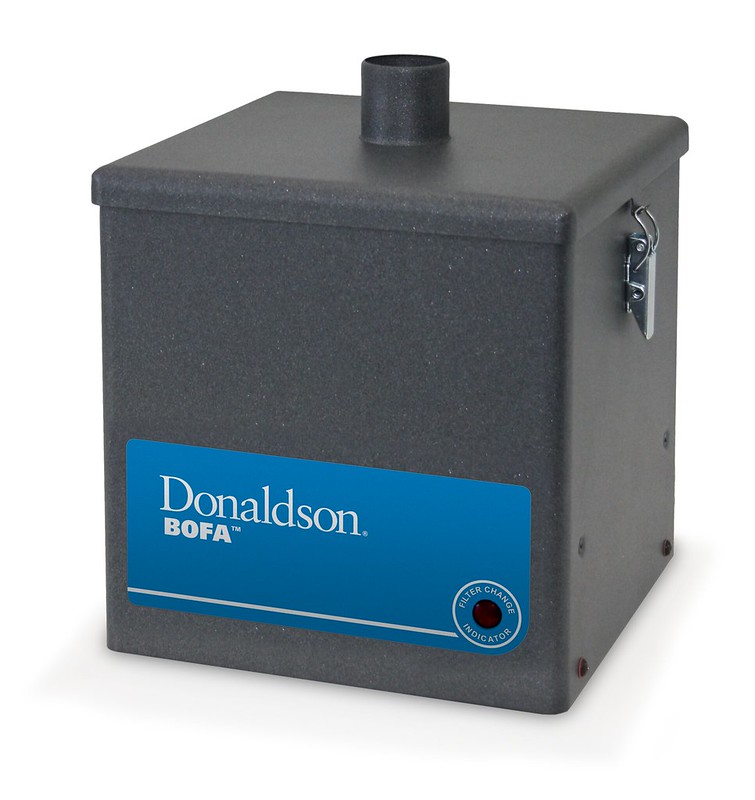 Desktop printer
3D PrintPRO 2
Compact and affordable, for an enclosed filament or resin printer or one fitted with a plenum, without cooling the deposition area.
- Airflow
- 45 m³/h
- Suction pressure
- 9 mbar
- Noise
- < 44 dB(A)
- Weight
- 7.8 kg
- Pre-filter and combined HEPA filter, 99.995% at 0.3 µm
- 3 litres of activated carbon for VOCs
- Optional remote start/stop
822,56 € excl. VAT
View product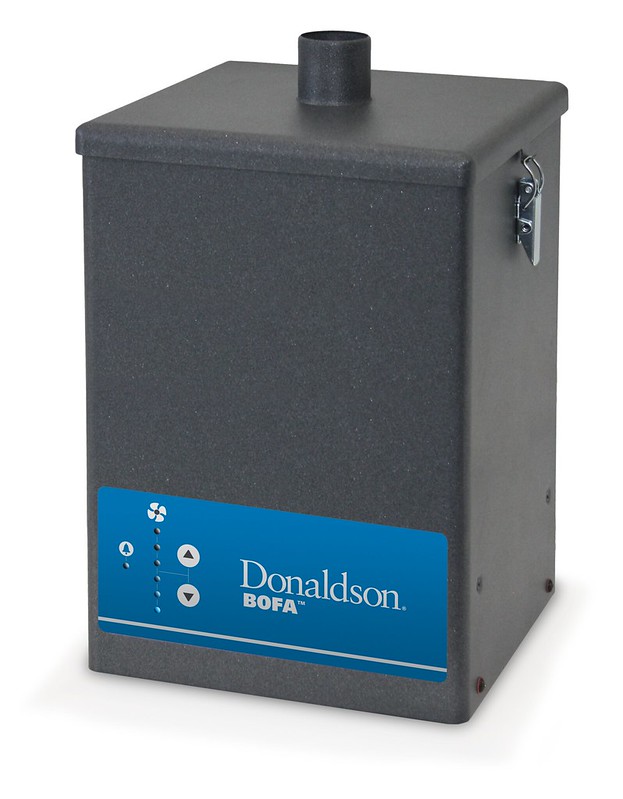 Resin and filament
3D PrintPRO 3
The all-rounder: resin, filament or material jetting, with two possible extraction points thanks to the hose kit.
- Airflow
- 120 m³/h
- Suction pressure
- 20 mbar
- Noise
- < 57 dB(A)
- Weight
- 11 kg
- Pre-filter and combined HEPA filter, 99.995% at 0.3 µm
- 3 litres of activated carbon
- Adjustable speed, optional filter change signal
894,64 € excl. VAT
View product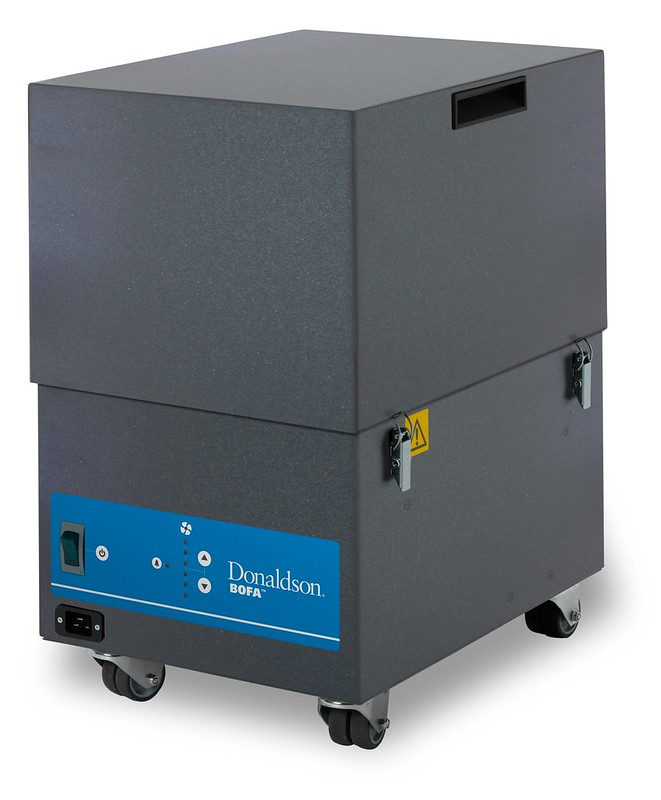 Large printers
3D PrintPRO 4
For large enclosed printers, polymer powders and machine fleets: filtered air can be returned to the enclosure.
- Airflow
- 270 m³/h
- Suction pressure
- 100 mbar
- Noise
- < 75 dB(A)
- Weight
- 51 kg
- Combined HEPA filter, 99.995% at 0.3 µm
- 7.4 litres of activated carbon and alumina
- Optional VOC sensor and “system OK” signal
2098,80 € excl. VAT
View product
Specifications: Donaldson BOFA 2026 data sheets[56]. Prices shown excl. VAT, taken from the AirPropre shop.
Your situation in four questions
Immediate guidance on your vigilance level, the pollutants to monitor and the right fume extractor.
Vigilance level
Very high vigilance
Hazardous agents or cumulative exposure: a formal risk assessment and enhanced measures are essential.
Pollutants to monitor
- Ultrafine particles (among the highest emissions)
- Styrene (classified as probably carcinogenic, IARC 2A)
- Other VOCs
Priority measures
- Place the printer in a closed enclosure (cover): this is the prerequisite for effective capture
- Connect the enclosure to a filtering fume extractor (pre-filter, HEPA and activated carbon)
- Leave the extraction running after printing ends before opening the enclosure
- Print away from occupied offices and classrooms; ventilate the room
Suggested starting point
3D PrintPRO 3 · 120 m³/h
For one or two printers (two-hose kit), resin or filament.
Audit and advice
Analysis of your processes, materials and premises to size the capture system.
Particle and VOC measurements
Air quality assessment before and after installation, to provide objective evidence of effectiveness.
Installation and maintenance
Commissioning, replacement filters in stock, servicing and repair of the entire BOFA range.
11Frequently asked questions
Your questions answered
Is PLA safe?
Is an air purifier enough?
My printer has a built-in filter: is that enough?
Should the air be exhausted outside?
How often should filters be changed?
Does an FFP2 mask protect you?
Printing in a classroom: what precautions?
Are resin printers more dangerous than filament printers?
12References
Sources and studies cited
Links accessed in November 2026. Scientific studies are cited in their language of publication.
- 1
Ricaud M., Patrascu C., Malard S., Keller F.X. (INRS) (2021). Fabrication additive ou impression 3D. Références en santé au travail no. 165, TP 47.
France
- 2
Keller F.X., Ricaud M., Patrascu C. (INRS) (2020). Fabrication additive ou impression 3D utilisant des matières plastiques. Practical safety sheet ED 148.
France
- 3
Patrascu C. (INRS), with Sallé B. (INRS) and Grange B. (Carsat Rhône-Alpes) (2019). Fabrication additive ou impression 3D utilisant les poudres métalliques. Practical safety sheet ED 144.
France
- 4
INRS (2022). Fabrication additive : ce qu'il faut retenir, effets sur la santé, prévention. Web dossier.
France
- 5
Keller F.-X. (INRS) (2021). La fabrication additive : quelle prévention en entreprise ?. Hygiène & sécurité du travail no. 262, DC 29.
France
- 6
Patrascu C., Bau S., Clerc F. (INRS); Philippot C., Steck J., Artous S. (CEA) (2021). Expositions professionnelles lors de la fabrication additive utilisant des poudres métalliques. Hygiène & sécurité du travail no. 263, NT 90.
France
- 7
Keller F.-X. (INRS) (2023). Fabrication additive : état des lieux de la prévention et perspectives. Hygiène & sécurité du travail no. 270, CC 39 (INRS technical day, 17 May 2022).
France
- 8
Keller F.X., Robert L., Klingler J. (INRS) (2026). Characterization of emissions generated during additive manufacturing of polymer parts by the fused deposition modeling technique. Journal of Occupational and Environmental Hygiene 23(1), 8-17.
France
- 9
Bau S., Rousset D., Payet R., Keller F.X. (INRS) (2020). Characterizing particle emissions from a direct energy deposition additive manufacturing process and associated occupational exposure to airborne particles. Journal of Occupational and Environmental Hygiene 17(2-3), 59-72.
France
- 10
Azzougagh M.N., Keller F.X., Cabrol E., Cici M., Pourchez J. (Mines Saint-Étienne, INRS) (2021). Occupational exposure during metal additive manufacturing: a case study of laser powder bed fusion of aluminum alloy. Journal of Occupational and Environmental Hygiene 18(6), 223-236.
France
- 11
Dieu S., Darut G., Meunier L. et al. (Ineris) (2023). Synthèse du projet CaRPE (fabrication additive métallique). Ineris, project funded by ADEME.
France
- 12
Fenech G., Fenech A., Bensefa-Colas L., Crépy M.N. (AP-HP) (2024). Three-dimensional printing: a new source of exposure to (meth)acrylates in a dental technician. Contact Dermatitis 90(5), 534-536.
France
- 13
CNRS, Chemical Risk Prevention unit (2018). Impression 3D et risques chimiques. Prevention sheet.
France
- 14
Brasseur G., Delaval K. (INRS) (2021). Dossier « La plasturgie » (impression 3D : les bons réflexes). Travail & Sécurité no. 823.
France
- 15
Samba H., Demange V. (INRS) (2026). Exposition des travailleurs aux particules ultrafines métalliques en fabrication additive et effets respiratoires et cardiovasculaires (étude en cours). INRS, study ET2023-001.
France
- 16
INRS (2026). Valeurs limites d'exposition professionnelle aux agents chimiques en France (liste du 9 octobre 2026). VLEP database, companion document.
France
- 17
French Labour Code (2021). Article R4222-10 : concentrations moyennes en poussières dans les locaux à pollution spécifique (décret n° 2021-1763). Légifrance.
France
- 18
Steinle P. (Suva) (2016). Characterization of emissions from a desktop 3D printer and indoor air measurements in office settings. Journal of Occupational and Environmental Hygiene 13(2), 121-132.
Switzerland
- 19
FOPH, Federal Office of Public Health (2026). Imprimantes et photocopieurs : informations supplémentaires sur l'impression 3D. Information page.
Switzerland
- 20
EPFL, Occupational Health and Safety (2024). 3D Printers Guidelines (version 3). Internal directive.
Switzerland
- 21
Suva (2026). Valeurs limites d'exposition aux postes de travail. Suva 1903, April 2026 edition, and online VME database.
Switzerland
- 22
EU-OSHA (Junte J.) (2017). 3D printing and additive manufacturing – The implications for OSH. European Agency for Safety and Health at Work, discussion paper.
European Union
- 23
Beisser R., Buxtrup M., Fendler D. et al. (IFA, DGUV) (2017). Inhalative Exposition gegenüber Metallen bei additiven Verfahren (3D-Druck). Gefahrstoffe – Reinhaltung der Luft 77(11/12), 487-496.
Germany
- 24
Beisser R., Werner S., Heinrich B., Pelzer J. (IFA, DGUV) (2020). Emissionen aus 3D-Tischdruckern – Nachstellende Untersuchungen – Teil 1. Gefahrstoffe – Reinhaltung der Luft 80(1-2), 53-60.
Germany
- 25
Gümperlein I., Fischer E., Dietrich-Gümperlein G. et al. (LMU Munich) (2018). Acute health effects of desktop 3D printing (fused deposition modeling) using acrylonitrile butadiene styrene and polylactic acid materials: an experimental exposure study in human volunteers. Indoor Air 28(4), 611-623.
Germany
- 26
BfR, German Federal Institute for Risk Assessment (2020). 3D-Druck – eine „staubige“ Angelegenheit?. Communication no. 050/2020.
Germany
- 27
Seeger S., Rasch F., Erdmann K., Brödner D., Wilke O. (BAM, for UBA) (2020). Weiterentwicklung des Prüfwertes für Ultrafeinstaubpartikel beim Umweltzeichen Blauer Engel für Drucker. Umweltbundesamt, TEXTE 217/2020.
Germany
- 28
Miljøstyrelsen, Danish Environmental Protection Agency (Jacobsen E., Larsen P.B. et al.) (2017). Risikovurdering af 3D-printere og 3D-printede produkter. Kortlægning af kemiske stoffer i forbrugerprodukter no. 160.
Denmark
- 29
Jensen A.C.Ø., Harboe H., Brostrøm A., Jensen K.A., Fonseca A.S. (NRCWE) (2020). Nanoparticle exposure and workplace measurements during processes related to 3D printing of a metal object. Frontiers in Public Health 8, 608718.
Denmark
- 30
Väisänen A.J.K., Hyttinen M., Ylönen S., Alonen L. (2019). Occupational exposure to gaseous and particulate contaminants originating from additive manufacturing of liquid, powdered, and filament plastic materials and related post-processes. Journal of Occupational and Environmental Hygiene 16(3), 258-271.
Finland
- 31
Väisänen A., Alonen L., Ylönen S., Hyttinen M. (2022). Organic compound and particle emissions of additive manufacturing with photopolymer resins and chemical outgassing of manufactured resin products. Journal of Toxicology and Environmental Health, Part A 85(5), 198-216.
Finland
- 32
Viitanen A.-K., Kallonen K., Kukko K. et al. (FIOH) (2021). Technical control of nanoparticle emissions from desktop 3D printing. Indoor Air 31(4), 1061-1071.
Finland
- 33
Kangas A., Kukko K., Kanerva T. et al. (FIOH, Aalto) (2023). Workplace exposure measurements of emission from industrial 3D printing. Annals of Work Exposures and Health 67(5), 596-608.
Finland
- 34
TTL, Finnish Institute of Occupational Health (2025). Exposure control in metal 3D printing work. Exposure control sheet.
Finland
- 35
Ljunggren S.A., Karlsson H., Ståhlbom B. et al. (2019). Biomonitoring of metal exposure during additive manufacturing (3D printing). Safety and Health at Work 10(4), 518-526.
Sweden, Norway
- 36
Assenhöj M., Almstrand A.-C., Kokelj S. et al. (2023). Occupational exposure and health surveys at metal additive manufacturing facilities. Frontiers in Public Health 11, 1292420.
Sweden
- 37
HSE (Hall S., Evans G.) (2023). Exposure to metal powders in additive manufacturing. Health and Safety Executive, Research Report RR1195.
United Kingdom
- 38
Stabile L., Scungio M., Buonanno G., Arpino F., Ficco G. (2017). Airborne particle emission of a commercial 3D printer: the effect of filament material and printing temperature. Indoor Air 27(2), 398-408.
Italy
- 39
Creytens K., Gilissen L., Huygens S., Goossens A. (2017). A new application for epoxy resins resulting in occupational allergic contact dermatitis: the three-dimensional printing industry. Contact Dermatitis 77(5), 349-351.
Belgium
- 40
Wojtyła S., Klama P., Baran T. (2017). Is 3D printing safe? Analysis of the thermal treatment of thermoplastics: ABS, PLA, PET, and nylon. Journal of Occupational and Environmental Hygiene 14(6), D80-D85.
Poland
- 41
Miller M.R., Raftis J.B., Langrish J.P. et al. (2017). Inhaled nanoparticles accumulate at sites of vascular disease. ACS Nano 11(5), 4542-4552.
United Kingdom, Netherlands
- 42
Stephens B., Azimi P., El Orch Z., Ramos T. (2013). Ultrafine particle emissions from desktop 3D printers. Atmospheric Environment 79, 334-339.
United States
- 43
Azimi P., Zhao D., Pouzet C., Crain N.E., Stephens B. (2016). Emissions of ultrafine particles and volatile organic compounds from commercially available desktop three-dimensional printers with multiple filaments. Environmental Science & Technology 50(3), 1260-1268.
United States
- 44
Zhang Q., Wong J.P.S., Davis A.Y., Black M.S., Weber R.J. (2017). Characterization of particle emissions from consumer fused deposition modeling 3D printers. Aerosol Science and Technology 51(11), 1275-1286.
United States
- 45
Stefaniak A.B., LeBouf R.F., Yi J. et al. (NIOSH) (2017). Characterization of chemical contaminants generated by a desktop fused deposition modeling 3-dimensional printer. Journal of Occupational and Environmental Hygiene 14(7), 540-550.
United States
- 46
House R., Rajaram N., Tarlo S.M. (2017). Case report of asthma associated with 3D printing. Occupational Medicine 67(8), 652-654.
Canada
- 47
Chan F.L., House R., Kudla I., Lipszyc J.C., Rajaram N., Tarlo S.M. (2018). Health survey of employees regularly using 3D printers. Occupational Medicine 68(3), 211-214.
Canada
- 48
Davis A.Y., Zhang Q., Wong J.P.S., Weber R.J., Black M.S. (2019). Characterization of volatile organic compound emissions from consumer level material extrusion 3D printers. Building and Environment 160, 106209.
United States
- 49
Zhang Q., Pardo M., Rudich Y. et al. (2019). Chemical composition and toxicity of particles emitted from a consumer-level 3D printer using various materials. Environmental Science & Technology 53(20), 12054-12061.
United States, Israel
- 50
Stefaniak A.B., Johnson A.R., du Preez S. et al. (NIOSH) (2019). Evaluation of emissions and exposures at workplaces using desktop 3-dimensional printers. Journal of Chemical Health & Safety 26, 19-30.
United States
- 51
Farcas M.T., Stefaniak A.B. et al. (NIOSH) (2019). Acrylonitrile butadiene styrene (ABS) and polycarbonate (PC) filament three-dimensional (3-D) printer emissions-induced cell toxicity. Toxicology Letters 317, 1-12.
United States
- 52
IARC (2019). Styrene, styrene-7,8-oxide, and quinoline. IARC Monographs on the Identification of Carcinogenic Hazards to Humans, vol. 121.
International
- 53
IARC (2025). Talc and acrylonitrile. IARC Monographs, vol. 136 (June 2024 evaluation).
International
- 54
ISO / ASTM (2023). NF EN ISO/ASTM 52931 – Additive manufacturing of metals – Environment, health and safety – General principles for use of metallic materials. International standard.
International
- 55
ISO (2024). ISO 27548 – Additive manufacturing of plastics – Environment, health, and safety – Test method for determination of particle and chemical emission rates from desktop material extrusion 3D printer. International standard.
International
- 56
Donaldson BOFA (2026). Fiches techniques 3D PrintPRO 2, 3D PrintPRO 3 et 3D PrintPRO 4. Manufacturer documentation.
United Kingdom
This guide is an information summary written by AirPropre on the basis of publicly available publications. It does not replace the employer's risk assessment, nor the advice of your occupational health and prevention service, your regional health insurance fund (Carsat, Cramif, CGSS) or Suva.
Let's talk about your installation
Have your 3D printing emissions assessed
Our technicians advise you on capture at source, filtration and maintenance in France, Belgium, Luxembourg and Switzerland.