
Technical guide · AirPropre expertise
Laser marking and engraving fumes: what the beam releases into the air
Plastics, wood, leather, metals: the laser vaporises the material and releases ultrafine particles and gases that are sometimes toxic or carcinogenic. What French, Swiss and European studies show, what the regulations require, and how to protect yourself.
Updated 11 November 2026 · 15 min read · 41 sources cited
- different chemicals identified when laser marking 13 materials, mainly plastics
≈ 250compounds
different chemicals identified when laser marking 13 materials, mainly plastics[33]
- particles emitted by a desktop CO₂ engraver when engraving cardboard
5,8 × 10¹⁰/min
particles emitted by a desktop CO₂ engraver when engraving cardboard[35]
- ultrafine particles in the fumes of a stripping laser, as measured by INRS
75 à 85%
ultrafine particles in the fumes of a stripping laser, as measured by INRS[1]
- during which nanoparticles continue to increase after cutting acrylic, with extraction switched off
20min
during which nanoparticles continue to increase after cutting acrylic, with extraction switched off[36]
01The key points in one minute
Four key messages
Object personalisation, industrial traceability, signage, fablabs and schools: laser marking and engraving have become commonplace. Yet every pulse vaporises a little material, and what comes out depends entirely on the material being processed.
Everything the laser vaporises ends up in the air
Marking, engraving or cutting means melting, vaporising or decomposing the material: vapours, aerosols and dusts form with every pass, and their toxicity depends on the material[8, 24].
The material determines the hazard
Hydrochloric acid from PVC, styrene and acrylonitrile from ABS, formaldehyde from POM, chromium VI and nickel compounds from cut stainless steel: know the material and you know the risk[3, 20].
The lid only holds back fumes until it is opened
A Class 1 machine contains the radiation, not the fumes: without extraction, they escape as soon as the lid is opened[14, 36].
The solution is known and effective
Enclosed machine, capture as close as possible to the marking point, filtration (pre-filter, HEPA, activated carbon) or exhaust to the outside, regular maintenance: this is the approach of occupational health and safety bodies[5, 16, 20].
2 000 à 4 000 m³/h
of general ventilation would be needed to dilute the fumes from a single stripping laser without capture at source, according to INRS calculations. These airflows are considered unrealistic: only capture at source can control exposure[1, 2].
Who is affected?
- Engraving and personalisation workshops
- Industrial marking and traceability
- Coding on packaging lines
- Signage and shop signs
- Leather goods and textiles
- Jewellery and watchmaking
- Fablabs and makerspaces
- Primary and secondary schools
02Emission mechanisms
How a laser pollutes the air
The beam concentrates a considerable amount of energy on a very small area. The material melts, vaporises or decomposes; as they cool, these vapours condense into very fine particles, accompanied by gases.
The extraction nozzle
Placed as close as possible to the marking point, it captures the plume before it disperses: enclosing the source and capturing as close to it as possible are the first two principles of local exhaust ventilation[5].
Finer than a virus: the size scale
Logarithmic scale (each graduation divides the size by 10). Deposition zones according to the conventions of standard NF EN 481.
- Human hair50 à 70 µm
- PM10 / PM2.5 particles≤ 10 µm / ≤ 2,5 µm
- Bacterium≈ 1 à 2 µm
- Virus≈ 0,02 à 0,3 µm
- Particles emitted by laser marking, engraving and cuttingpeak often between 30 and 60 nm
Nose, mouth, throat
inhalable fraction
Trachea, bronchi
< 10 µm
Pulmonary alveoli
respirable fraction, < 4 µm
Alveoli and possible passage into the blood
ultrafine, < 0.1 µm
03Laser technologies
Each laser has its own emissions
The wavelength determines which materials a laser can process, and therefore the fumes it produces. Here are the four families found in marking and engraving.
- High
10.6 µm · engraving and cutting
CO₂ laser
Its infrared radiation is absorbed by wood, paper, leather, fabrics, acrylic or glass, which it vaporises and burns at the surface to engrave, or through the full thickness to cut.
- Emissions
- Abundant smoke: fine and ultrafine particles, tars, VOCs, carbon monoxide; depending on the material, methyl methacrylate, hydrogen cyanide or hydrochloric acid.[33, 34, 35]
- Critical moments
- Cutting and deep engraving, unknown or coated materials, large engraved areas, opening the lid immediately after the cycle.
- High
1064 nm · marking of metals and plastics
Fibre or MOPA laser
This near-infrared laser marks metals by oxidation or ablation, as well as many plastics containing additives; at high power, it cuts sheet metal.
- Emissions
- Very fine metal oxide fumes; with stainless steel, chromium VI compounds and nickel oxide documented in cutting; fine dust, sometimes incandescent, at high speed on aluminium.[3, 21, 26]
- Critical moments
- Deep and high-speed marking, stainless steels, coated or galvanised sheet, cleaning of optics and nozzles.
- High
355 or 532 nm · “cold” marking
UV or green laser
Its short wavelength breaks the bonds in the material directly: fine marking of sensitive plastics, glass, electronics and packaging.
- Very high
Blue diode, desktop CO₂ · no housing
Open hobby machines
Engravers sold without a protective enclosure, often at low prices: the beam and fumes spread freely into the room.
Hazard matrix by laser and material
AirPropre summary based on the sources cited. The actual level depends on the materials, power, machine containment and work organisation.
| Laser and material | Ultrafine particles | VOCs and organic gases | Acid or toxic gases | CMR metals | Fire |
|---|---|---|---|---|---|
| CO₂ · wood, MDF, cardboard, paper | High | High | Low | —Negligible | Very high |
| CO₂ · acrylic (PMMA) | High | High | Low | —Negligible | High |
| CO₂ · leather, fabrics, felt | High | High | High | High | High |
| Fibre or UV · engineering plastics (ABS, POM, PC, PA) | High | High | High | —Negligible | Low |
| Fibre · metals (stainless steel, aluminium, steel) | Very high | —Negligible | Low | High | High |
| Any laser · PVC, vinyl, PTFE | High | High | Very high | —Negligible | Low |
04Materials
What each material releases
| Material | Laser | Main pollutants identified | Point to watch |
|---|---|---|---|
| PVC, vinyl, imitation leatherVery high | All lasers | Hydrochloric acid, benzene, vinyl chloride, chlorinated compounds[7, 20, 29, 33] | Do not use: prohibited in school workshops even with extraction, it also attacks the machine and the fume extractor. If the process is unavoidable: dedicated fume extractor and prior study. |
| PTFE (Teflon)Very high | All lasers | Hydrogen fluoride, carbonyl fluoride, perfluoroisobutylene, fine fluorinated dust[7, 20] | Pulmonary oedema possible at a few ppm: do not process without a specific study. |
| ABS, polystyrene, SANVery high | Fibre, CO₂ | Styrene, 1,3-butadiene, acrylonitrile; hydrogen cyanide and ammonia as the temperature rises[7, 9, 20] | Possible carcinogens: in Germany, air recirculation prohibited and exhaust to the outside mandatory. “To be avoided” in school workshops. |
| POM (polyacetal)Very high | Fibre, CO₂ | Formaldehyde[20] | Carcinogenic formaldehyde: in Germany, air recirculation prohibited unless compliance with the limit value is demonstrated. |
| Acrylic (PMMA)High | CO₂: cutting and engraving | Methyl methacrylate, formaldehyde, nanoparticles released when the lid is opened[7, 9, 36] | Leave the extraction running before opening. Cast PMMA is among the materials permitted in schools. |
| Polycarbonate (PC)High | Fibre, UV | Phenol, formaldehyde, traces of benzene[7, 9, 20] | Risk of ignition and toxic fumes: “to be avoided” in school workshops. |
| Polyamide, PBT, PANHigh | Fibre, UV, CO₂ | Cyclopentanone (PA 66), 1,3-butadiene and benzene (PBT), acrylonitrile and hydrogen cyanide (PAN)[20] | Engineering plastics, often filled: check the composition with the supplier. |
| Polyethylene, polypropyleneLow to moderate | Fibre, UV, CO₂ | Aliphatic hydrocarbons and aldehydes, fine particles[20, 40] | Few specific toxic substances, but many fine particles: capture and filter. |
| Wood, plywood, MDFHigh | CO₂ | Fine particles and tars, VOCs, carbon monoxide; possible formaldehyde from panel adhesives[7, 8, 35] | The urea-formaldehyde adhesives in plywood and particleboard sometimes contain up to 10% free formaldehyde. Fire risk: never leave the machine unattended. |
| Paper, cardboardHigh | CO₂ | Massive emission of fine and ultrafine particles, VOCs, carbon monoxide[15, 35] | The highest-emitting material in the US study on a desktop engraver; fire risk. |
| LeatherVery high | CO₂ | Chromium VI with chrome-tanned leathers, fine particles[9, 37] | Chrome-tanned leather prohibited in school workshops by the Bordeaux education authority; choose vegetable-tanned leather instead. |
| Fabrics, felt, laminatesHigh | CO₂ | Hydrogen cyanide with nitrogen-containing materials (wool, polyamide, melamine), aldehydes, acrylates[34] | Up to 15 ppm of hydrogen cyanide measured in the enclosure with felt. |
| Stainless steelsVery high | Fibre: marking, cutting | Ultrafine metal oxides; chromium VI compounds and nickel oxide, documented in cutting[3, 21, 24] | No published measurements for marking: err on the side of caution, with highly efficient filtration and exhaust to the outside if possible. |
| Aluminium, galvanised steelHigh | Fibre | Metal oxide fumes, ozone with aluminium; higher emissions with zinc-coated sheet[3, 16, 41] | At high speed, fine dust liable to ignite: spark arrestor upstream of the fume extractor. |
| Glass, ceramicsHigh | CO₂, UV | Extremely fine particles, silica depending on the composition[22] | For ceramics, around 40% of the particle mass is smaller than 0.03 µm. |
| Paints, coatings, unknown materialsVery high | All lasers | PAHs, isocyanates, benzene, ozone (measured during paint stripping)[1, 9] | Never process a material of unknown composition. |
INRS data on plastics come from laboratory thermal degradation tests, without a laser, at up to 450 °C[7].
05Health effects
Where particles go, and what they cause
The finer a particle, the deeper it penetrates into the respiratory tract. Laser fumes, which are almost entirely respirable, reach the region where air and blood exchange gases.
Nose, mouth, throat: particles larger than 10 µm
The largest dust particles are trapped in the upper airways and then cleared.Trachea and bronchi: thoracic fraction, less than 10 µm
These particles reach the bronchial tree, where they can cause irritation and coughing.Alveoli: respirable fraction, less than 4 µm
This is the dominant fraction of laser fumes: more than 95% of the stripping dust measured by INRS[1].Possible passage into the blood: less than 0.1 µm
Ultrafine particles are deposited in large numbers in the alveoli. Their toxicity cannot be inferred from the composition of the material alone, German researchers observe[22].
Eye and respiratory tract irritation
Acrolein, formaldehyde and other aldehydes, hydrochloric acid, ozone, amines: several compounds in laser fumes are potent irritants[1, 8].
Lung damage
Depending on the material, respirable laser dust can be carcinogenic, toxic, harmful to the lungs or inflammatory; it is often unknown which new substances are formed[24].
Acute poisoning
Carbon monoxide exceeding 100 ppm in the plume when marking PET, hydrogen cyanide up to 15 ppm in the enclosure when cutting felt[33, 34].
Allergies and asthma
Acrylates and isocyanates are respiratory and skin sensitisers; nickel compounds present a risk of skin and respiratory sensitisation[1, 8, 13].
Carcinogenic substances
Benzene, formaldehyde, vinyl chloride, 1,3-butadiene, acrylonitrile, and chromium VI and nickel compounds are classified by IARC as known carcinogens. Laser fumes themselves have not been evaluated[39].
Fire
A Class 4 laser can ignite wood, paper or plastics; deposits in ducts and the fine metal dust from high-speed fibre lasers can also catch fire[15, 21, 41].
06State of knowledge
What the studies say
Since the 1990s, occupational health and safety bodies and laboratories have been measuring what laser processes release. The results converge: emissions are systematic and very fine, their nature depends on the material, and they are significantly reduced by enclosure and capture at source.
FRFrance
2026 · INRS
Fumes from a fibre stripping laser
More than 95% of the dust is respirable, of which 75 to 85% is ultrafine; benzene, PAHs, isocyanates and ozone measured. Without capture at source, 2,000 to 4,000 m³/h of general ventilation would be needed: capture at source is essential.
2018 · INRS
Fumes from laser cutting of metals
At 1 kW, 16 to 24 mg/s of fumes for steel and 14 to 35 mg/s for stainless steel, which releases nickel oxide and chromium VI compounds. With nitrogen as the cutting gas, stainless steel fumes are reduced by almost half.
2019 · INRS (laboratory tests, without a laser)
What heated plastics release
At 450 °C: 47.5% methyl methacrylate for PMMA, 15 to 20% styrene and acrylonitrile for ABS, hydrochloric acid and 2% benzene for PVC, phenols for polycarbonate.
2019 · CNRS
Pollutants from laser processes, material by material
PVC: hydrochloric acid; paper and wood: esters, acids, alcohols, benzene; plastics: allergenic acrylates and isocyanates, carcinogenic benzene and PAHs, irritant acrolein and formaldehyde, toxic cyanide and CO.
CHSwitzerland
2025 · Federal Office of Public Health
Fact sheet on laser material processing
Laser engraving, cutting, welding and cleaning give off toxic fumes: an effective extraction system is considered mandatory. For private use, only fully enclosed Class 1 engravers are permitted.
2026 · Suva
Cutting and welding: protection against fumes
Laser cutting of stainless steel and zinc-coated sheet produces higher emissions; extraction at the point of emission. Returned air must not exceed one third of the limit values, and exhaust to the outside is preferable.
UEEurope
2023 · DGUV, Germany
Laser marking of plastics
Formaldehyde (POM), styrene, butadiene and acrylonitrile (ABS), hydrochloric acid (PVC), hydrogen fluoride (PTFE). With enclosure and extraction, concentrations measured at workstations from 2001 to 2021 mostly remain below the limits of quantification.
2025 · IFA, Germany
Chromium VI in laser welding
Of 115 chromium VI measurements taken from 2011 to 2020 during laser welding, 9.6% exceeded the German assessment value of 0.001 mg/m³: a laser process can expose workers to chromium VI.
2003 · BIA, Germany (LASER 2000 project)
Laser ablation in 19 companies
Ceramics: around 40% of the particle mass below 0.03 µm. Respirable dust of 4.13 mg/m³ in the worst case without protection, below 0.09 mg/m³ with enclosure and capture.
2025 · University of Pavia, Italy
CO₂ and fibre laser cutting of sheet metal
Average exposure of 161,960 particles/cm³ during CO₂ cutting of stainless steel, five times the background level, with peaks of 2.8 million; 73 to 89% of particles are smaller than 0.3 µm.
2022 · STAMI, Norway
Metal laser cutting operators
Particles mostly smaller than 0.3 µm, with a peak around 40 nm for the fibre laser. Low exposures on enclosed machines; the authors warn that open machines may result in higher metal exposure.
2024 · CLEAPSS, United Kingdom
Open laser machines in schools
CO₂ and diode engravers without housing: no effective fume control, and no evidence that the extraction sold with them is effective. CLEAPSS advises against these machines in schools.
INTKey international studies
1999 · NIOSH
CO₂ laser marking of 13 materials
Around 250 compounds identified in the plume, mainly with plastics. PVC: hydrochloric acid, benzene, vinyl chloride; carbon monoxide exceeding 100 ppm with PET.
2024 · Universities of Oklahoma and Cincinnati
40 W desktop CO₂ engraver
Inside the machine enclosure: up to 254 mg/m³ of respirable particles when engraving cardboard, VOCs and carbon monoxide. Ventilation reduces particles by 61% on average.
2023 · UCLA
Laser cutting of acrylic in a workshop
Nanoplastics of 15 to 86 nm released each time the lid is opened, rising for at least 20 minutes with extraction switched off; stable levels as long as the filtering fume extractor is running.
1997 · NIOSH
Laser cutting of fabrics and polymers
Hydrogen cyanide up to 15 ppm in the enclosure with felt and 8 to 10 ppm with a melamine laminate; methyl methacrylate with acrylics; acid deposits in the ducts.
2024 · University of Cincinnati
Laser cutting of leather
High concentrations of chromium VI when cutting chrome-tanned leathers with ventilation switched off; nanoparticles emitted by all the leathers tested.
What the studies show
All laser processes emit, and most particles are respirable or ultrafine. Plastics produce the most compounds, some of them carcinogenic. With enclosure and extraction, German measurements at plastic marking workstations mostly remain below the limits of quantification.
What they do not say
Many measurements are taken in the plume or inside the machine enclosure: they describe the emission, not the operator's exposure. No French or Swiss body has published measurements specific to marking or engraving, and the only comparison between UV and CO₂ lasers comes from manufacturers[40]. The message remains the same: not harmless, and therefore to be controlled.
07Regulatory framework
What the law requires of employers
No legislation specifically targets laser marking fumes: the general rules on chemical risk prevention and workplace ventilation apply, in addition to the specific rules on laser radiation.
FRFrance
- Assess the risks and record them in the single risk assessment document (DUERP), Art. R4121-1 of the French Labour Code; hazardous chemical agents and carcinogens: Art. R4412-1 et seq.
- Capture emissions as they are produced, as close as possible to the source; automatically signal any failure of the capture system that would not otherwise be detectable (Art. R4222-12 and R4222-13)[10].
- Recirculate air from premises with specific pollution only if it is effectively cleaned, and only into premises with the same type of pollution (Art. R4222-14)[11].
- Inspect the extraction installation at least once a year, and every six months where air is recirculated[12].
- Comply with occupational exposure limits (OELs; French VLEP)[13]; train operators in laser risks (Art. R4452-1 et seq.)[1].
CHSwitzerland
- Ordinance 3 to the Employment Act (OLT 3), Art. 18: extract fumes effectively as close as possible to the source; air may only be reintroduced if it is not harmful to health[17].
- Returned air: at most one third of the limit values; exhaust to the outside is preferable[16].
- MSST Directive: the use of Class 3B and 4 lasers is a particular hazard[18]; Suva concludes that a laser safety officer must be appointed[15].
- For private use, only Class 1 engravers are permitted; the FOPH considers effective extraction of toxic substances to be mandatory[14].
- Workplace exposure limits (Swiss MAK values, VME) published by Suva[19].
UEEuropean Union
- Directive 98/24/EC on chemical agents and Directive 2004/37/EC on carcinogens, mutagens and reprotoxic substances.
- Machinery Regulation (EU) 2023/1230, applicable from 20 January 2027: hazardous substances emitted by machinery must be capable of being contained, captured, evacuated or filtered[30].
- Standards EN 60825-1 (laser classes) and EN ISO 11553-1:2020 (safety of laser processing machines with regard to radiation)[32]. No standard sets an extraction airflow for marking: the ISO 21904 series covers welding and thermal cutting fumes[31].
- In Germany, air recirculation is prohibited for marking several plastics (ABS, SAN, polyethylene, PAN, PBT), as the formation of carcinogens cannot be ruled out[20].
Limit values for the main pollutants emitted
8-hour values in mg/m³ (in brackets: in ppm), unless otherwise stated. France: VLEP[13], C = binding; Switzerland: VME[19], (i) = inhalable, (a) = alveolar (respirable). Classification: IARC[39]. Values as of November 2026, to be checked against the legislation in force before any assessment.
| Substance | Source in laser processing | French OEL (VLEP) | Swiss MAK value (VME) | Classification |
|---|---|---|---|---|
| Formaldehyde | POM, wood panel adhesives | 0,37 (0,3) · C | 0,37 (0,3) | IARC 1 |
| Benzene | PVC, PET, PBT, coatings | 0,66 (0,2) · C | 0,7 (0,2) | IARC 1 |
| Vinyl chloride | PVC | 2,59 (1) · C | 2,6 (1) | IARC 1 |
| 1,3-Butadiene | ABS, PBT | 2,2 (1) · C | 4,4 (2) | IARC 1 |
| Acrylonitrile | ABS, SAN, PAN | 1 (0,45) · C | 4,5 (2) | IARC 1 (2024) |
| Styrene | ABS, polystyrene | 100 (23,3) · C | 85 (20) | IARC 2A |
| Methyl methacrylate | Acrylic (PMMA) | 205 (50) · C | 210 (50) | IARC 3 |
| Hydrogen chloride | PVC | 7.6 (5) over 15 min · C | 3 (2) | IARC 3 |
| Hydrogen cyanide | Nitrogen-containing materials: felt, wool, polyamide, ABS | 1 (0,9) · C | 2 (2) | — |
| Hydrogen fluoride | PTFE | 1,5 (1,8) · C | 0,83 (1) | — |
| Carbon monoxide | Wood, cardboard, PET | 23 (20) · C | 23 (20) | Reprotoxic |
| Phenol | Polycarbonate, epoxy | 7,8 (2) · C | 19 (5) | IARC 3 |
| Acrolein | Combustion of organic materials | 0,05 (0,02) · C | 0,05 (0,02) | IARC 2A |
| Chromium VI | Stainless steel, chrome-tanned leather | 0,001 · C | 0,005 (i) | IARC 1 |
| Nickel compounds | Stainless steel, nickel alloys | 0.05 inhalable · 0.01 respirable · C | 0,05 (i) · 0,01 (a) | IARC 1 |
| Ozone | Aluminium, UV lasers, stripping | 0,2 (0,1) | 0,2 (0,1) | — |
| Wood dust | Cutting wood | 1 · C | 2 (i) | IARC 1 |
| Dusts with no specific effect | All materials | 4 inhalable · 0.9 respirable | 10 (i) · 3 (a) | — |
| Ultrafine particles | All laser processes | No VLEP | No VME | — |
08Prevention approach
Prevention: in what order to act
- S
Eliminate or substitute
Ban PVC, PTFE and unknown materials; choose the lowest-emitting settings: INRS identifies reducing pulse energy as the first lever[1]. - T
Enclose the machine
An enclosed machine contains both radiation and fumes: according to the DGUV, this is the most effective form of capture[20]. - T
Capture at source and filter
Nozzle or enclosure extraction connected to a fume extractor: pre-filter, HEPA filter, activated carbon; or exhaust to the outside after filtration. - O
Organise and maintain
List of permitted materials, extraction before opening the lid, annual inspection, filters changed in time, operator training. - P
Protect people
Gloves, safety glasses and at least an FFP2 mask for filter changes and cleaning: as a supplement, never as a substitute[20].
Good practice
- Display the list of permitted and prohibited materials next to the machine[9]
- Never process an unknown, painted or coated material without knowing its composition[1, 9]
- Keep the lid closed and the extraction running throughout the cycle
- Leave the extraction running for a few moments after the end of the cycle before opening the lid[36]
- Capture as close as possible to the marking point, without placing the operator between the source and the extraction point[5]
- Clean the machine with at least a Class M vacuum cleaner, never with a blow gun[20]
- Train operators in changing and cleaning filters, which concentrate pollutants[38]
- Have the extraction installation inspected at least once a year[12, 20]
- Keep a suitable fire extinguisher nearby and never leave the machine unattended[9]
Common pitfalls
- Relying on smell: ultrafine particles are odourless
- Relying on the lid alone: it releases the fumes when opened
- Believing that a UV laser gives off no fumes
- A hose to the window without a properly sized fume extractor
- A HEPA filter alone: it does not trap gases
- Activated carbon that is never replaced: once saturated, it traps nothing
- Blowing dust out of the machine with compressed air
09Filtration
Effective filtration: three complementary stages
Laser fumes combine very fine particles, tars and gases. No single filter medium deals with all of them: a fume extractor suited to lasers combines a pre-filter, a HEPA filter and an activated carbon stage in series.
Inlet
Captured fumes
Fine and ultrafine particles, tars, gases and odours extracted at the marking point or from the machine enclosure.Stage 1
Pre-filter
Pleated and with a large surface area, it traps the largest particles and the tars that would quickly clog the HEPA filter.Stage 2
HEPA filter
99,995 % à 0,3 µm
Captures fine and ultrafine particles, including metal oxide fumes.Stage 3
Activated carbon
Adsorbs VOCs and odours. Its service life depends on the pollutants, humidity and temperature: it must be replaced at the latest as soon as an odour appears[16].Outlet
Cleaned air
Recirculated into the room or exhausted outside, depending on the pollutants and the applicable regulations.
HEPA efficiency: Donaldson BOFA manufacturer data for the laser range[41].
The difference capture makes: measured results
Reduction in respirable particle concentrations with capture, compared with the same operation without capture.
Ventilation of a desktop CO₂ engraveraverage, all materials
−61%
Same machine, engraving woodlow power
−77%
Enclosure and capture in industrial ablationceramics, at least
−97%
Enclosed machine (Class 1)
The enclosure contains the radiation and the fumes; extraction keeps it under slight negative pressure throughout the cycle.Nozzle as close as possible to the marking point
Air velocity drops very quickly with distance: at a distance equal to the nozzle diameter, it is only one tenth of the velocity at the inlet[5].Short, smooth duct
Sufficient air velocity in the ducts prevents deposits, which can catch fire: at least 12 to 15 m/s according to the DGUV[21].Filtering fume extractor
Pre-filter, HEPA and activated carbon, with clogging indicator; spark arrestor upstream for high-speed fibre lasers.Cleaned air
Recirculated into the room, or exhausted outside for metals and high-risk plastics, away from fresh air inlets[5].Make-up air
Extracted air must be replaced, without draughts that would disrupt capture[5].
Criteria for choosing a fume extractor
- Airflow and suction pressure
- Sufficient to maintain the capture velocity at the emission point despite filter clogging, taking into account the nozzle and the duct length.
- Large-surface pre-filter
- Tar-laden laser fumes cause rapid clogging: a large-surface pleated pre-filter protects the HEPA filter and extends the intervals between replacements.
- Particle filtration efficiency
- HEPA filter: this is what traps ultrafine particles.
- Activated carbon and special filters
- Quantity of carbon suited to the VOCs; chemical filter and hydrogen chloride sensor for acid gases from PVC.
- Monitoring
- Clogging indicator and optional VOC sensor: carbon saturation cannot be seen. In France, any capture failure that cannot otherwise be detected must be signalled automatically (Art. R4222-13).
- Interlock
- Start and stop controlled by the laser machine, run-on delay after the end of the cycle.
- Fire safety
- Spark arrestor and temperature sensor for high-speed fibre lasers, ducts cleaned regularly.
10Donaldson BOFA solutions
The Donaldson BOFA laser range
AirPropre is an official Donaldson BOFA distributor. The laser range combines a pre-filter, HEPA filter and activated carbon in fume extractors suited to every use, from the desktop engraver to the production line.
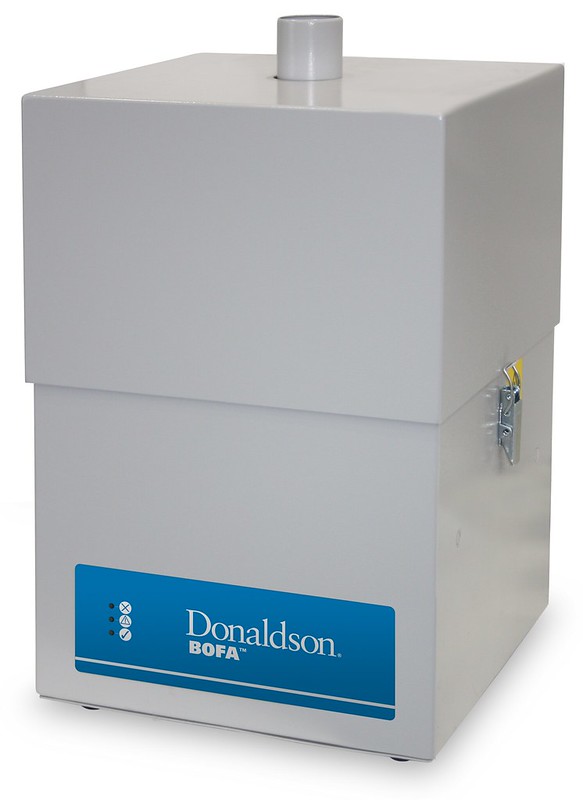 Desktop engraver
AD Access
Compact, for small engraving, cutting or marking machines used occasionally.
- Airflow
- 180 m³/h
- Suction pressure
- 30 mbar
- Noise
- < 61 dB(A)
- Weight
- 24 kg
- DeepPleat pre-filter and combined HEPA filter, 99.995% at 0.3 µm
- 7 kg of activated carbon
- Optional VOC sensor and remote start/stop
1286,84 € excl. VAT
View product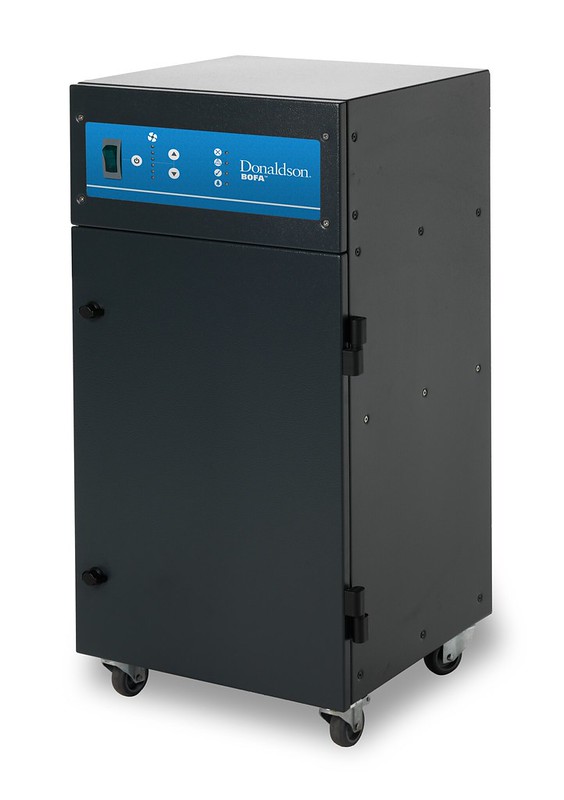 Marking station
AD Nano+
For regular engraving or marking use, where floor space is limited.
- Airflow
- 300 m³/h
- Suction pressure
- 96 mbar
- Noise
- < 60 dB(A)
- Weight
- 42 kg
- 6 m² DeepPleat DUO pre-filter
- 7.5 kg of activated carbon
- Automatic airflow control
2214,34 € excl. VAT
View product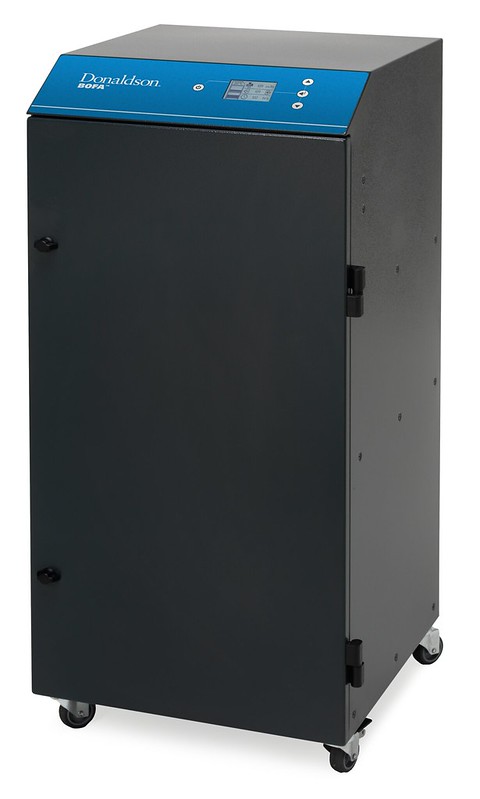 Production
AD Oracle iQ
The all-rounder for engraving and cutting workshops, with on-screen filter and airflow monitoring.
- Airflow
- 380 m³/h
- Suction pressure
- 95 mbar
- Noise
- < 70 dB(A)
- Weight
- 65 kg
- 12 m² DeepPleat DUO pre-filter and HEPA, 99.995% at 0.3 µm
- 15.5 litres of activated carbon
- iQ display: real-time airflow and status of each filter
2904,40 € excl. VAT
View product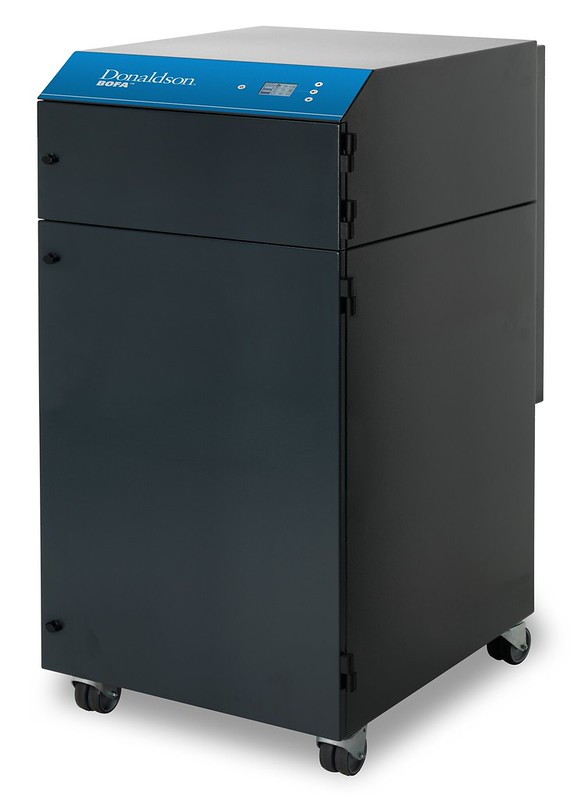 Heavy-duty applications
AD 1000 iQ
For large-format cutting, marking lines and heavy particle loads.
- Airflow
- 780 m³/h
- Suction pressure
- 60 mbar
- Noise
- < 70 dB(A)
- Weight
- 147 kg
- 30 m² DeepPleat DUO pre-filter
- 53.7 litres of activated carbon
- iQ display and airflow control
6052,60 € excl. VAT
View product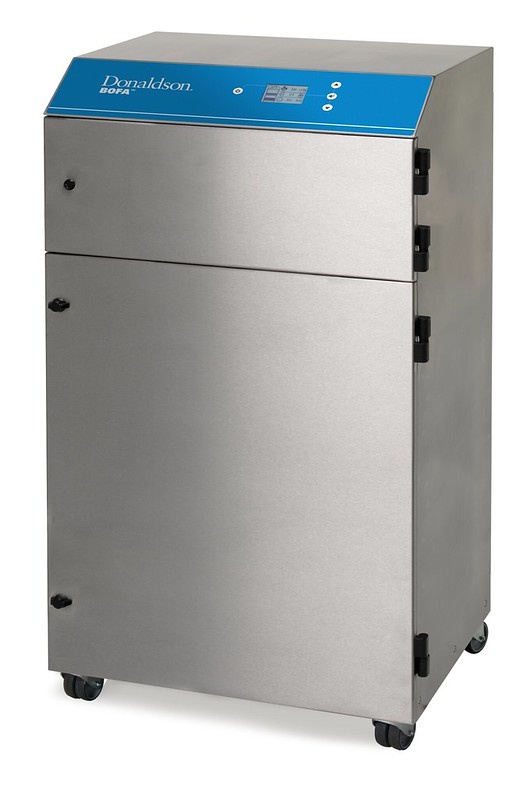 PVC processing
AD PVC iQ
Designed for acid fumes from PVC, when the process cannot be substituted.
- Airflow
- 350 m³/h
- Suction pressure
- 96 mbar
- Noise
- < 60 dB(A)
- Weight
- 95 kg
- Bag pre-filter, combined HEPA filter and chemical filter
- Hydrogen chloride sensor as standard
- Brushed stainless steel and acid-protected internal parts
5395,40 € excl. VAT
View product Spark arrestor
Spark Arrestor 2
To be fitted upstream of the fume extractor to stop glowing particles from high-speed fibre lasers.
- Connection
- 76.5 or 125 mm
- Weight
- 41 kg
- Alarm
- +10 °C
- Filter
- None
- Baffles and removable collection tray
- Temperature sensor: alarm and fume extractor shutdown
- Recommended for fibre lasers on aluminium
2656,36 € excl. VAT
View product
Specifications: Donaldson BOFA 2026 data sheets[41]. Prices shown excl. VAT, taken from the AirPropre shop.
Your situation in four questions
Immediate guidance on your vigilance level, the pollutants to monitor and the right fume extractor.
Vigilance level
High vigilance
Fumes to be captured at source: exposure must be controlled by filtered extraction suited to the material.
Pollutants to monitor
- Smoke laden with fine particles and tars
- VOCs and carbon monoxide; formaldehyde with bonded panels
- Wood dust, panel adhesives and binders
Priority measures
- Capture as close as possible to the marking point, using a nozzle or enclosure extraction
- Filter in three stages: pre-filter, HEPA filter for particles, activated carbon for gases and odours
- Leave the extraction running for a few moments after the end of the cycle before opening the lid
Suggested starting point
AD Oracle iQ · 380 m³/h
For an engraving or cutting production workstation, with on-screen filter monitoring.
Audit and advice
Analysis of your machines, materials and premises to size the capture and filtration system.
Particle and VOC measurements
Air quality assessment before and after installation, to provide objective evidence of effectiveness.
Installation and maintenance
Commissioning, replacement filters in stock, servicing and repair of the entire BOFA range.
11Frequently asked questions
Your questions answered
My machine is Class 1: do I still need extraction?
Can I engrave or cut PVC?
Does a UV laser produce fewer fumes?
Should the air be exhausted outside, or can it be recirculated?
What extraction airflow is needed?
How often should filters be changed?
Is a mask enough?
What precautions in a school or fablab?
12References
Sources and studies cited
Links accessed in November 2026. Scientific studies are cited in their language of publication.
- 1
Santandrea A., Marchal M., Bemer D., Cloteaux A., Brissinger D., Bourgogne N., Pain R. (INRS) (2026). Risques liés aux équipements lasers manuels. Exemple du décapage de peinture thermolaquée. Hygiène & sécurité du travail no. 283, NT 130.
France
- 2
INRS (2026). L'INRS met en garde contre les équipements laser manuels utilisés pour des opérations de soudage, décapage et découpe. Press release of 10 February 2026.
France
- 3
INRS (based on the German guide BGI 593) (2018). Les fumées de soudage et des techniques connexes. Technical memo ED 6132, 2nd edition.
France
- 4
INRS (2014). Opérations de soudage à l'arc et de coupage. Guide pratique de ventilation n° 7. ED 668, 3rd edition, 2014 reprint.
France
- 5
INRS (2022). Principes généraux de ventilation. Guide pratique de ventilation. ED 695, 5th edition.
France
- 6
INRS (2022). L'assainissement de l'air des locaux de travail. Guide pratique de ventilation. ED 657, 3rd edition.
France
- 7
INRS (2019). Plastiques, risque et analyse thermique (fiches PVC, PMMA, ABS, PC, PTFE, urée-formaldéhyde). Database; laboratory thermal degradation tests, without a laser.
France
- 8
CNRS, National Prevention and Safety Coordination (2019). Guide Risques liés aux lasers, chapitre 8 : les risques associés et leur prévention. Les cahiers de prévention (archived copy).
France
- 9
Académie de Bordeaux, lower secondary technology education (2026). Sécurité en technologie au collège. Règles, vérifications et références officielles. Teaching resource.
France
- 10
French Labour Code (2008). Articles R4222-12 et R4222-13 : captage des émissions et signalement des défaillances. Code du travail numérique.
France
- 11
French Labour Code (2008). Article R4222-14 : recyclage de l'air des locaux à pollution spécifique. Code du travail numérique.
France
- 12
French Ministry of Labour (1987). Arrêté du 8 octobre 1987 relatif au contrôle périodique des installations d'aération et d'assainissement des locaux de travail. Légifrance, current version.
France
- 13
INRS (2026). Valeurs limites d'exposition professionnelle aux agents chimiques en France (liste du 9 octobre 2026). VLEP database, companion document.
France
- 14
FOPH, Federal Office of Public Health (2025). Traitement de matériaux par laser : gravure laser, soudage laser, découpe laser, nettoyage laser. Fact sheet of 20 March 2025.
Switzerland
- 15
Suva (2016). Attention : rayonnement laser ! Utiliser les équipements laser en toute sécurité. Brochure 66049.
Switzerland
- 16
Suva, on behalf of the CFST (2026). Coupage et soudage. Protection contre les fumées, poussières, gaz et vapeurs. Leaflet 44053, February 2026 edition.
Switzerland
- 17
SECO, State Secretariat for Economic Affairs (2020). Commentaire de l'ordonnance 3 relative à la loi sur le travail, article 18 : pollution de l'air. OLT 3 commentary.
Switzerland
- 18
CFST, Swiss Federal Coordination Commission for Occupational Safety (FCOS) (2025). Directive relative à l'appel à des médecins du travail et autres spécialistes de la sécurité au travail (directive MSST). CFST 6508, as at 23 October 2025.
Switzerland
- 19
Suva (2026). Valeurs limites d'exposition aux postes de travail. Suva 1903, April 2026 edition, and online VME database.
Switzerland
- 20
DGUV, Sachgebiet Gefahrstoffe (2023). DGUV Information 213-729 – Empfehlungen Gefährdungsermittlung der Unfallversicherungsträger (EGU) nach der Gefahrstoffverordnung – Beschriftung von Kunststoffen mit Lasern. German Social Accident Insurance, March 2023 revision.
Germany
- 21
DGUV, Sachgebiet Nichtionisierende Strahlung (2019). DGUV Information 203-093 – Handlungshilfe für die Gefährdungsbeurteilung beim Betrieb von offenen Laser-Einrichtungen zur Materialbearbeitung. German Social Accident Insurance.
Germany
- 22
Bruch J. (University of Essen), in Riediger G. (ed.), BIA (2003). Arbeits- und Umweltschutz bei industriellen Laserabtragverfahren. BIA-Report 7/2003, Ultrafeine Aerosole an Arbeitsplätzen, pp. 133-140.
Germany
- 23
IFA, DGUV (2025). Expositionsdaten zu Chrom(VI)-Verbindungen (MEGA 2011-2020). Exposure data sheet, March 2025.
Germany
- 24
AUVA (2023). M 080 – Grundlagen der Lasersicherheit. Austrian Workers' Compensation Board.
Austria
- 25
Paulin N., Pernetti R., Scafa F., Candura S.M., Oddone E. (2025). Evaluation of Particle and Nanoparticle Emissions in Fiber and CO2 Laser Cutting Processes. Processes 13(6), 1942.
Italy
- 26
Eriksen Hammer S., Halvorsen J.Ø., Graff P., Ervik T.K. (STAMI) (2022). Characterisation of Particles Emitted during Laser Cutting of Various Metal Sheets and an Exposure Assessment for the Laser Operators. International Journal of Environmental Research and Public Health 19(16), 9888.
Norway
- 27
SLIC, Senior Labour Inspectors' Committee (European Commission) (2018). Guidance for National Labour Inspectors on addressing health risks from Welding Fume (fiche TS 7 : laser cutting). Inspection guide.
European Union
- 28
CLEAPSS (2024). The Small Print (machines laser ouvertes dans les écoles). FutureMinds, autumn 2024.
United Kingdom
- 29
NASUWT (2019). Laser Cutters and 3D Printers. Health and safety sheet.
United Kingdom
- 30
European Union (2023). Règlement (UE) 2023/1230 sur les machines, annexe III, point 1.5.13. Official Journal of the European Union, L 165.
European Union
- 31
ISO (2020). ISO 21904-1 – Health and safety in welding and allied processes – Equipment for capture and separation of welding fume – Part 1: General requirements. International standard.
International
- 32
ISO (2020). ISO 11553-1 – Safety of machinery – Laser processing machines – Part 1: Laser safety requirements. International standard.
International
- 33
Kiefer M., Moss C.E. (NIOSH) (1999). Health Hazard Evaluation Report HETA 99-0109-2754, VideoJet Systems International. NIOSH, evaluation report.
United States
- 34
Kiefer M., Moss C.E. (NIOSH) (1997). Laser generated air contaminants released during laser cutting of fabrics and polymers. Journal of Laser Applications 9(1), 7-13.
United States
- 35
O'Neill K., Niu X., Wang J., Fang R. (2024). Respirable Particles and Gas Contaminants Emissions from a Desktop Laser Cutter and Engraver. Aerosol and Air Quality Research 24(8), 240032.
United States
- 36
Munoz A., Schmidt J., Suffet I.H.M., Tsai C.S.-J. (2023). Characterization of Emissions from Carbon Dioxide Laser Cutting Acrylic Plastics. ACS Chemical Health & Safety 30(4), 182-192.
United States
- 37
Niu X., Hall P., Wang J., Lange S. (2024). Airborne Hexavalent Chromium and Particulate Matter Emissions during the Laser Cutting of Leathers. ACS Chemical Health & Safety 31(4), 306-312 (abstract).
United States
- 38
Broadwater K., Grimes G.R., Wiegand D.M. (NIOSH) (2019). Evaluation of Laser Coding Particulate Composition, Health Effects, and Safety Climate at a Brewery. NIOSH, HHE Report 2017-0072-3347.
United States
- 39
IARC (2026). Agents Classified by the IARC Monographs, Volumes 1-140. Official list of classifications, accessed in November 2026.
International
- 40
Donaldson BOFA and Linx (2025). UV Laser Emissions Report (UV vs CO2 laser fume). Manufacturers' report, not peer-reviewed.
United Kingdom
- 41
Donaldson BOFA (2026). Fiches techniques de la gamme laser (AD Access, AD Nano+, AD Oracle iQ, AD 1000 iQ, AD PVC iQ, Spark Arrestor 2). Manufacturer documentation.
United Kingdom
This guide is an information summary written by AirPropre on the basis of publicly available publications. It does not replace the employer's risk assessment, nor the advice of your occupational health and prevention service, your regional health insurance fund (Carsat, Cramif, CGSS) or Suva.
Let's talk about your installation
Have the fumes from your laser machines assessed
Our technicians advise you on capture at source, filtration and maintenance in France, Belgium, Luxembourg and Switzerland.