
Industrial air treatment: what are the solutions?
Why treat the air in your working environment?
The air we breathe plays a vital role in our well-being. However, in industrial environments, it can be heavily polluted by various harmful substances, such as fine particles, toxic gases, chemical vapours and dust. These pollutants and fumes can not only harm the health and safety of workers, but also cause material damage to a machine or other production unit.
To guarantee a healthy industrial environment and comply with environmental and safety standards, it is essential to be equipped with industrial air treatment equipment. In this article, we explore the different filtration solutions available for air treatment in industrial environments.
Air treatment: the different filtration techniques
In the field of industrial air treatment, there are two main filtration systems.
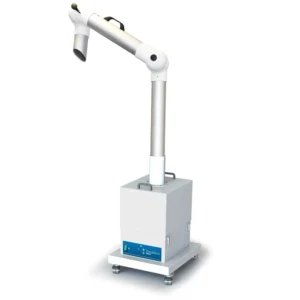
Source filtration
This filtration system consists of removing fumes and dust directly at the source of contamination. It is effective for controlling specific sources and areas of pollution, such as welding fumes, paint emissions or emissions from an industrial machine. However, this filtration technique is made possible by specific equipment, such as hoods, extraction arms or suction nozzles.
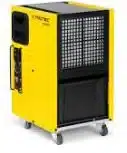
Ambient filtration
The ambient extraction filtration system aims to purify the air throughout the workshop or factory, regardless of the source of pollution. This filtration mode draws in the ambient air, filters it to remove contaminants, then returns it to the workshop, all while maintaining appropriate purity levels. It is ideal for industrial environments where pollution sources are multiple and scattered, which consequently makes it difficult to control them individually. In addition, the ambient filtration unit is equipped with suitable filters to remove a wide range of contaminants, including fine dust, toxic gases and chemical particles.
Why treat the air in my industrial plant?
Legal obligations regarding air treatment
The importance of air treatment in industrial settings cannot be underestimated. Environmental regulations, air quality standards and safety rules have become increasingly strict for the professional world. By neglecting air treatment, you risk severe and costly penalties. Fines, facility closures and litigation can have a devastating impact on the reputation and profitability of your business. It is therefore imperative to comply with these legal obligations by investing in appropriate air filtration and treatment systems or equipment.
Risk of illness for staff
Beyond the legal consequences, industrial air treatment is essential for workers’ health and safety. Airborne pollutants emitted in industrial workshops can have harmful effects on human health. Employees exposed to these dusts and gases may develop respiratory problems, skin allergies and even serious long-term illnesses. Moreover, an unhealthy working environment can lead to high absenteeism, reduced output and higher healthcare costs for the company.
Consequently, by treating the air in your workshop, you demonstrate a sense of responsibility towards your employees’ safety. This can strengthen job satisfaction and employee loyalty, while reducing health-related risks.
Protecting your industrial equipment
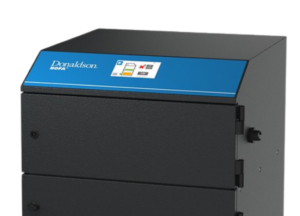
Discover our range of filtration products
Which filtration units should you choose?
Several ranges of filtration units are available to meet the specific needs of each industrial environment.
Fume treatment: fume treatment systems are designed to remove particles, dust and gases arising from welding, laser cutting or other manufacturing operations. They guarantee clean and safe air for workers.
Air handling unit: air handling units are comprehensive equipment that manages air quality in a workshop. They also include filtration, ventilation and humidity control to maintain an optimal working environment.
Industrial air purifier: industrial air purifiers are compact and mobile, which makes them suitable for small industries or specific applications. They effectively remove pollutants from the ambient air.
The different filter categories
Furthermore, every fume extractor, extraction unit or other air treatment system is itself built around a filter-based filtration process. Filters play a crucial role in air purification and treatment. The different categories of filters used in filtration units include:
Pre-filters
Pre-filters are the first line of defence in the filtration process. They capture large particles, such as dust and debris, before the air passes through finer filters. In addition, pre-filters extend the life of the main filters by retaining coarse particles, which reduces the frequency of replacement and the maintenance costs of the filtration units.
Absolute filters (HEPA and ULPA)
Absolute filters are an essential element of industrial air treatment. They are designed to deliver exceptional filtration quality. These filters use a complex filter medium and a sophisticated design to guarantee optimal filtration performance. Absolute filters are widely used in ultra-clean environments such as cleanrooms in the pharmaceutical industry, research laboratories and other applications where air purity is crucial. They play an essential role in removing microscopic contaminants that could compromise the quality of products or processes.
HEPA filters (High Efficiency Particulate Air) and ULPA filters (Ultra Low Penetration Air) are two categories of filter that offer a high level of filtration. The main difference between HEPA and ULPA filters lies in their ability to retain particles of different sizes. HEPA filters are efficient enough for most applications. ULPA filters, on the other hand, are used where extreme levels of purity are required.
Carbon filters
Activated carbon filters, on the other hand, are designed to remove toxic gases and vapours. Activated carbon has a large specific surface area that adsorbs harmful gases. These filters are used in the chemical industries and in applications where odour removal is important.
In conclusion, air treatment systems in industrial settings are essential to ensure worker safety, comply with environmental regulations and protect equipment and materials. In short, it is important to choose the right filtration system for your specific needs in order to maintain a healthy, environmentally friendly working environment.
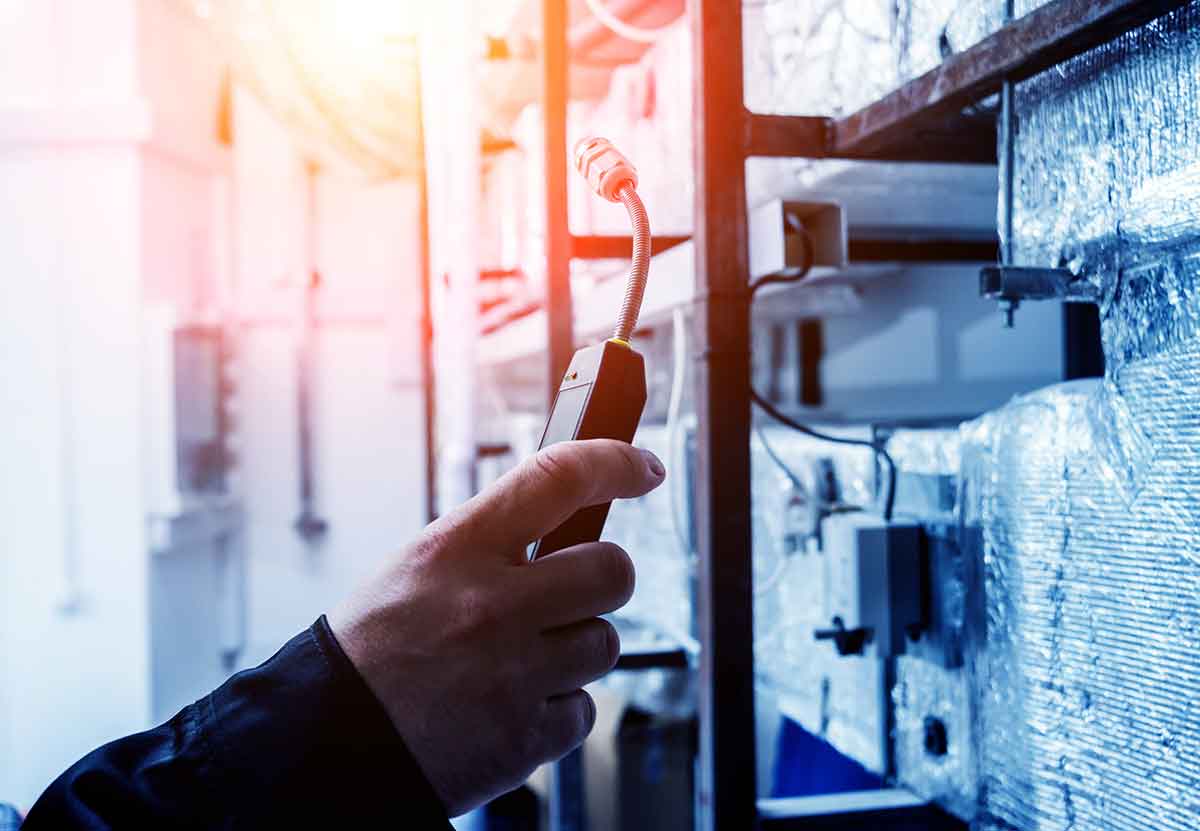
Audit, advice, analysis, servicing and repair… Benefit from the skills and expertise of our teams to help you choose the right product and filtration system, with an airflow suited to your application.