The 5 mistakes to avoid when choosing a filtration system
Choosing a suitable filtration system is crucial to ensure a healthy, safe and compliant environment. Yet mistakes often creep into this process, leading to disappointing performance, unnecessary costs and even health risks. In this article, we present the 5 mistakes to avoid at all costs when selecting your filtration system, in order to guarantee clean air and a lasting installation.

1. Failing to properly assess the pollutants to be treated
The first mistake is to underestimate the nature and diversity of the pollutants present. Air can contain fine particles, fumes, chemical vapours or even micro-organisms. Each type of pollutant requires a specific filter.
For example, choosing a purely mechanical filter for gases or odours will not be effective. It is therefore essential to carry out a thorough analysis of the environment to identify the contaminants before selecting a system.
2. Ignoring standards and certifications
Often, the emphasis is placed on price or ease of installation, at the expense of compliance. Yet complying with standards (such as ISO 16890, ISO 29463) and certifications (CE, UL) is indispensable.
These standards guarantee not only the performance of the filter, but also user safety and the legality of the installation. Failing to take these factors into account can result in penalties, accident risks or malfunction.
3. Choosing a system unsuited to the environment
Every site has its own specific features: size of the premises, volume of air to be treated, presence of other equipment, regulatory constraints, and so on. A common mistake is to choose a system that is too small or too large.
Undersized equipment will not filter the air effectively. Conversely, an oversized system can result in wasted energy and high running costs. It is therefore advisable to rely on experts to size the installation precisely.
4. Neglecting filter maintenance and replacement
A filtration system that performs well at the outset can quickly lose its efficiency if it is not maintained. Consequently, failing to plan a suitable maintenance schedule is a mistake to avoid.
Filters must be checked regularly and replaced according to their actual service life, which depends on air quality and usage. Skipping this step can lead to clogging, excess energy consumption and even breakdowns.
5. Omitting multi-stage filtration (cascade filtration)
Finally, choosing a system with a single filter is often insufficient. Industrial air generally contains several types of pollutants, which require cascade filtration.
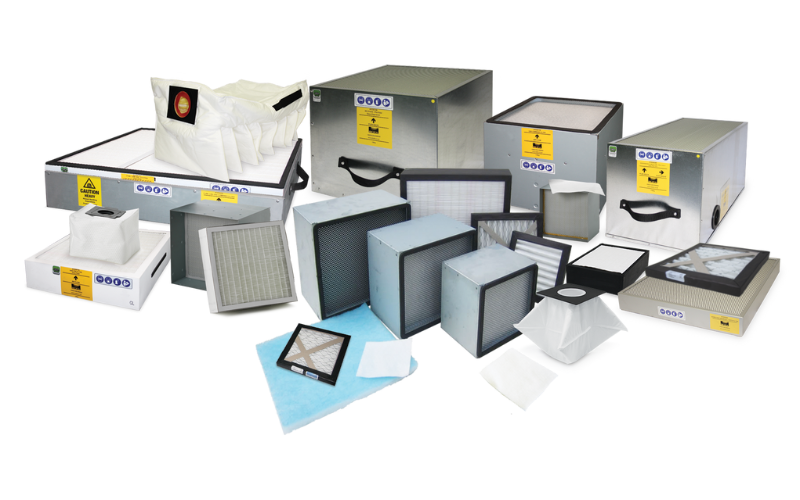
This principle relies on several successive filters, each capturing a specific category of contaminants (large particles, fine particles, gases, odours). Not adopting this approach can considerably reduce overall efficiency and increase costs in the long term.
Conclusion
To choose your filtration system successfully, it is therefore essential to avoid these 5 major mistakes: analyse the pollutants properly, comply with standards, size the system correctly, ensure maintenance, and favour cascade filtration.
At Airpropre.fr, we support you at every stage to offer high-performance, reliable solutions suited to your environment. Please feel free to contact us for a personalised assessment.