
Industrial dust and fumes: what are the risks?
Definition of industrial dust?
First of all, industrial dust is a ubiquitous problem in many industries. Classifying it into different categories is essential for assessing risks and putting appropriate control measures in place. Dust classes L, M and H are designations commonly used to distinguish these pollutants according to their hazard level and characteristics.
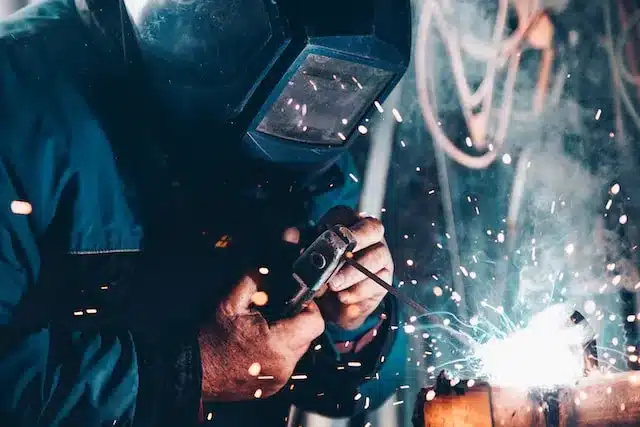
Class L dust (low risk)
Class L dust is considered to pose a low risk to workers’ health. It generally consists of coarser, less harmful particles. This dust has specific occupational exposure limits (OELs), which indicate the maximum concentrations to which workers can be safely exposed over an eight-hour period. In addition, class L dust generally comes from low-risk activities, such as sanding non-hazardous materials or cleaning operations.
Class M dust (medium risk)
Class M dust is somewhat more of a concern in terms of health risks. It generally contains finer particles and can be more harmful to workers’ respiratory systems. Class M dust is generated by activities such as grinding metals and handling chemicals, as well as working with composite materials.
Consequently, occupational exposure limits for class M dusts are stricter than for class L, simply because they may contain potentially hazardous substances. To control exposure to class M dusts, effective extraction and filtration systems are essential.
Class H dust (high risk)
Unlike other types of dust, class H dusts are the most worrying in terms of health risks. They often contain very fine particles, as well as potentially carcinogenic or toxic substances. Class H dusts are generated by activities such as working with highly harmful chemicals, heavy metals or hazardous materials.
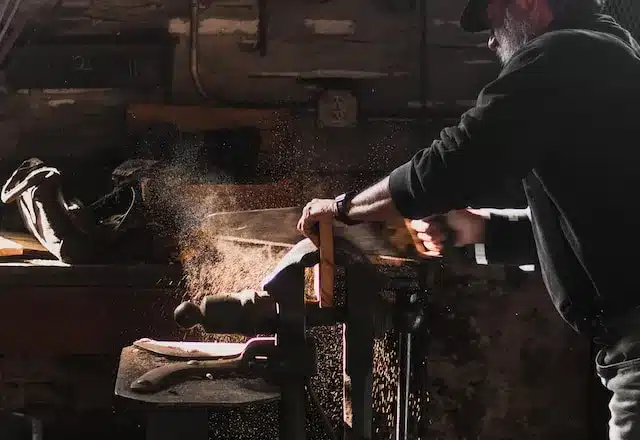
Definition of industrial fumes
Industrial fume is made up of tiny droplets capable of condensing into a liquid or gaseous state. They generally measure between 0.7 and 1.0 micron. It is a form of thermally generated mist, often referred to as oily fume. This type of liquid fume is typically produced by processes that involve heating and/or compressing liquids at high pressures. It is essential to understand the composition and origin of industrial fumes in order to assess the potential risks and put effective control solutions in place. In addition, the proper management of industrial fumes is essential for protecting workers’ health, as well as for preventing explosion risks and maintaining air quality in industrial environments.
It is therefore crucial to understand the different sources of industrial fumes and the specific sectors in which they are generated. Sources of industrial fumes are diverse and can be found in several industrial sectors, each characterised by particular processes.
Sources of industrial fumes
Welding and brazing: welding operations generate metal fumes resulting from the melting of metals. These fumes often contain fine particles of metals such as zinc, lead and manganese, posing risks to workers’ respiratory health.
Heat treatment processes: industries involved in the heat treatment of metals, such as quenching and tempering, can produce oil fumes. These fumes result from the use of oils to cool or lubricate metal parts during thermal processes.
Chemical industry: handling chemicals at high temperatures can give rise to chemical fumes. These fumes may contain potentially hazardous substances, therefore requiring rigorous control measures to protect workers.
Electronics sector: electronic manufacturing processes, such as component soldering, can generate soldering fumes. These fumes may contain heavy metals, soldering fluxes and other harmful compounds.
Food industry: certain processes in the food industry, such as high-temperature cooking and frying, can produce food fumes. These fumes may contain organic particles that require particular attention in terms of emission control.
The fume generation process
First of all, the generation of industrial fumes often results from the combination of heating and compression of liquids. In welding, for example, metals are heated to high temperatures, causing them to melt. At the same time, the use of welding flux, which can be liquid, contributes to the formation of fumes. Similarly, in the chemical industry, heating chemicals can cause them to vaporise, producing chemical fumes. These processes can also involve the compression of gases, increasing the concentration of particles in the air.
Controlling industrial fume emissions in these sectors is essential to avoid risks to workers’ health, minimise environmental impact and ensure compliance with applicable standards and regulations. Installing extraction and filtration systems suited to each process is necessary to contain these emissions effectively.
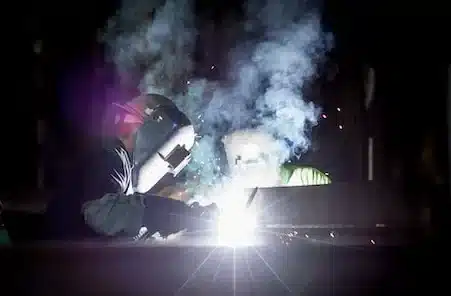
Potential risks associated with industrial dust and fumes
Health hazards
Exposure to industrial dust and fumes can have harmful effects on workers’ health, since these pollutants often contain fine particles and harmful chemicals. Inhaling these substances can lead to various health problems, including respiratory disorders, irritation of the airways and lung infections, or even chronic lung diseases such as silicosis or asbestosis. Consequently, workers exposed to these risks may also develop symptoms such as coughing, breathing difficulties, fever or chest pain.
Hazards to industrial equipment
In addition to the health risks, industrial dust and fumes can damage industrial equipment and machinery. The accumulation of particles in ventilation systems, motors, electrical circuits or other components can lead to premature wear and breakdowns. Production processes can be disrupted, resulting in additional maintenance costs and unplanned downtime.
Explosion risks
Under certain conditions, particularly in the presence of combustible dust, there is a risk of explosion. Combustible dusts, such as those from flour, wood or soot, can build up in the air and become potentially explosive. A spark from an electrical, mechanical or thermal source can ignite these dusts, causing an explosion. However, several conditions can favour a devastating explosion:
Concentration in the air: a sufficiently high concentration of combustible dust in the air is a prerequisite. When these particles reach a critical level, the air-dust mixture becomes explosive.
Presence of an ignition source: any device or activity capable of generating a spark, whether from an electrical, mechanical or thermal source, can trigger the explosion. Operations such as welding, faulty electrical equipment or heating systems are potential triggers.
Confined environment: a confined or partially confined space can aggravate the effects of an explosion. The accumulation of combustible dust in restricted spaces increases the explosion pressure, causing greater damage.
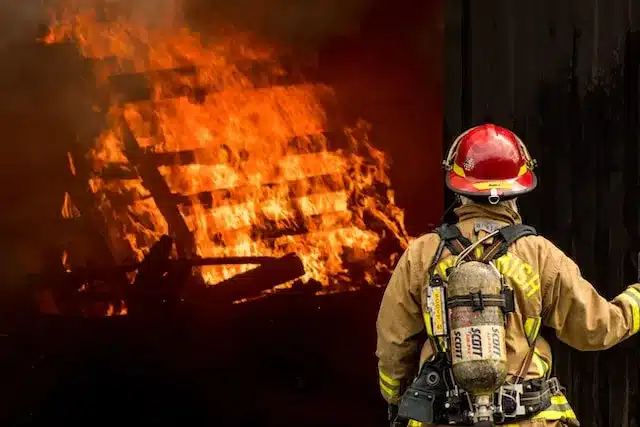
The potential damage caused by an explosion
Having examined the specific conditions that lead to dust explosions, it is essential to understand the potential damage that can result from these devastating events. These consequences go beyond material disruption, affecting worker safety, business continuity and even the environment. Let us now explore the impacts of these explosions in more detail.
Material destruction: industrial dust explosions can cause considerable material damage. The shock waves resulting from the explosion can damage the surrounding structures, equipment and facilities.
Injuries and loss of life: explosions pose an imminent danger to workers’ safety. In addition to material damage, shock waves, flying debris and the fires that follow can cause serious injuries, or even loss of life.
Disruption of operations: explosions have the potential to significantly disrupt production processes. Unplanned downtime can lead to substantial costs, affecting the company’s overall profitability.
Environmental impact: the substances released during an explosion can have an impact on the environment. Pollutants can be dispersed into the air, water or soil, with harmful consequences for the ecosystem.
Company reputation: explosions can have repercussions on the company’s reputation, especially if safety negligence is identified. This can affect the trust of customers, business partners and the public.
To conclude, proactive management of explosion risks involves a rigorous assessment of potential conditions, the implementation of preventive measures, such as controlling dust concentration and eliminating sources of sparks, and training workers in safe practices. Constant vigilance and compliance with safety standards are crucial to preventing these serious incidents.
Preventive solutions to reduce exposure to industrial dust and fumes
Carry out an air quality audit
One of the first steps in reducing the risks associated with industrial dust and fumes is to carry out an air quality audit. It is essential to measure the level of risk to which operators are exposed, and to assess the sources and types of pollution. This is part of a process of reflection. Can the hazard be eliminated by changing the processes? Can the hazard be replaced by a less harmful substance? Measuring pollutant levels, in particular concentrations of particles and harmful gases, is crucial for identifying risk areas.
Implementing a filtration and extraction solution suited to industrial dust and fumes
To reduce the risks, it is essential to implement appropriate filtration and extraction solutions. Equipment such as fume extractors, ventilation systems and industrial filters, as well as extraction arms and fume hoods, are essential components. They help to capture and remove pollutants effectively at source, thereby protecting workers’ health and preserving the integrity of equipment.

Regulations on industrial dust and fumes: advice and procedures
Compliance with international standards on exposure to industrial dust and fumes is crucial for protecting workers’ health and preserving the environment. Companies can take several specific steps, some of them simple, quick and inexpensive, to ensure this compliance.
Initial compliance assessment: the first step is an initial assessment of compliance with international standards. Companies can carry out a self-assessment by comparing their current procedures with the requirements set out in standards such as European Directive 2004/37/EC, ISO 16890, or OSHA regulations in the United States. This simple approach makes it possible to quickly identify potential gaps and to initiate the necessary corrective actions.
Staff training: a simple and effective approach is to set up staff training sessions. Informing employees about the risks associated with industrial dust and fumes, as well as safe working practices, can considerably improve compliance. Training sessions can be organised cost-effectively, in particular by using online resources or by working with specialist organisations for on-site training.

Implementing good practices: defining and implementing good practices are simple but effective ways of improving compliance. Drawing up safe working procedures, recommending the use of personal protective equipment (PPE) and encouraging safe working habits all help to reduce risks. Companies can develop internal guides based on the best practices recommended by the standards.
Use of accessible technologies: affordable and easy-to-implement technologies, such as air quality monitoring sensors, can be deployed to track pollutant levels in the working environment in real time. This enables companies to quickly detect any exceedance of regulatory thresholds and to make immediate adjustments. These technologies offer a cost-effective solution for improving compliance.
Working with advisory bodies: companies can also benefit from working with advisory bodies that specialise in environmental and health compliance. These experts can provide industry-specific advice and help to put good practices in place, as well as offering compliance audits at a lower cost.
In conclusion, compliance with international standards does not always require massive investment. By adopting simple measures, such as self-assessment, staff training, the introduction of good practice, the use of affordable technologies and collaboration with external experts, companies can gradually improve their compliance while minimising costs. These efforts not only help to meet standards, but also to create a safer, more sustainable working environment.