
When to replace my extractor’s filter?
How do I know when to replace my extractor’s filter?
As indicated on the unit
Fume extraction systems have indicators to tell you when to replace the filter in my extractor. These indicators vary depending on the model. Some devices are fitted with an air quality indicator, while others have an hour counter or a clogging indicator. This equipment is designed to let you know when it is time to replace the filter or filters in your extractor. They generally use a visual colour indicator, such as a red LED, which lights up when the filter needs replacing.
According to a schedule
An effective way to know when to change the filter in your extractor is to keep a replacement schedule. This approach can be particularly useful if your equipment does not have a clogging indicator. Replacing filters according to a schedule is a valid solution, particularly in areas with little dust or low pollution. According to the recommendations of BOFA – Donaldson, a world leader in filtration and air treatment equipment, it is advisable to replace filters every year. However, the replacement frequency may vary depending on the level of pollution and how the extractor is used.
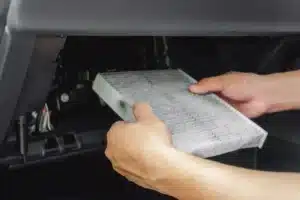
When to replace my extractor’s filter?
For a pre-filter
Pre-filters are intended to protect the main filters (in particular HEPA filters) by retaining coarser particles. You should plan to replace the pre-filters when the clogging indicator signals it, or at least once a year, particularly if the extractor is used in a professional environment. As a general rule, it is advisable to replace the pre-filters about four times before changing the main filter. When the main filter is replaced, it is essential to replace all the pre-filters at the same time to ensure optimal efficiency.
For a HEPA filter
HEPA filters are designed to remove fine particles, including viruses (if they are grade H13 or H14). Replacing them regularly is essential to maintain air quality. As they are among the most expensive filters, it makes sense to replace them only when necessary. Preferably choose extractors fitted with a clogging indicator. This allows HEPA filters to be replaced only when the level of clogging causes a drop in airflow, indicating that replacement is needed. For filters used to combat viruses and bacteria, replacement once or twice a year is recommended, depending on exposure to pollutants.
For an activated carbon filter
Predicting the right time to replace an activated carbon filter can be a tricky task. Unlike particulate filters, activated carbon does not show a progressive pressure drop linked to its saturation level. As a result, carbon saturation is generally identified by other means, notably the return of pollutant odours in the air. Where only one type of pollutant is present, detection can also be done by measuring a concentration above a predefined threshold on the clean-air side of the purification unit.
However, this last method only works when there is a single pollutant. When several volatile organic compounds (VOCs), for example, are present in combination, it becomes difficult to measure the clean-air concentration. This is why it is generally recommended to replace the activated carbon filter at least once a year to maintain effective filtration and guarantee good indoor air quality, particularly in environments exposed to a variety of pollutants.
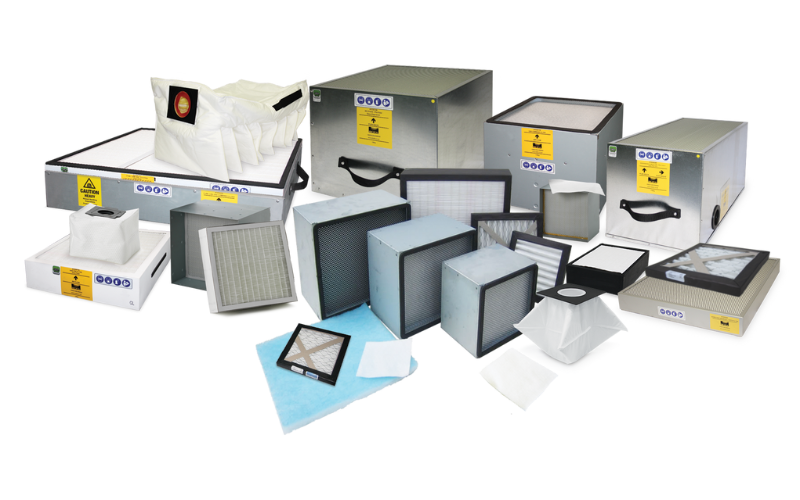
What are the risks of not replacing filters?
Risks to machines
Failing to replace filters poses significant risks to your entire air extractor system, as well as to its essential components such as the motor, the fan and other key parts. When filters are blocked and clogged, the airflow through the extractor is reduced, which leads to several potential problems. First of all, premature wear of the motor and fan is a likely consequence of a clogged filter. The motor has to work harder to maintain the necessary airflow, which can lead to increased energy consumption and rapid deterioration of its internal components.
Moreover, a clogged filter can seriously compromise the extractor’s performance. This results in ineffective ventilation. Polluted air is not properly extracted from the workshop, which can lead to a build-up of pollutants, odours and particles in the workspace. Airborne particles can settle on other machines and equipment, affecting the entire machine fleet.
Risks to operators and staff
Maintaining indoor air quality is an essential concern for the health and safety of operators and staff working around the extractor. A saturated filter can become a real problem by compromising this air quality. When filters are blocked, the consequences can be serious. They no longer retain pollutants and odours effectively, allowing potentially harmful substances to escape into the ambient air. This release of pollutants can lead to a deterioration in air quality, with direct repercussions for workers’ health. The health risks are numerous. In addition, humidity can also become a problem when filters are not working properly, which can promote the growth of mould and bacteria in the space, creating a potentially unhealthy environment.
Best practice for replacing the filter in my extractor
Schedule a timetable for replacing my extractor’s filter
Establishing a filter replacement schedule is an essential preventive measure to maintain a healthy environment and ensure optimal extractor performance. However, it is crucial to note that the schedule must be carefully tailored to several factors, notably the type of filter, the extractor model and the type of installation.
Each type of filter has specific characteristics and a service life that varies according to its exposure to pollutants and the conditions of use. The extractor model also plays an essential role. Extractors used in industrial environments or production workshops may be exposed to much higher levels of pollution than those used in an office environment. The type of installation and the level of activity can influence how often filters need replacing. In an installation with continuous, intensive production, filters may become saturated more quickly than elsewhere.
Organising preventive maintenance
Preventive maintenance involves planning and coordinating maintenance activities in order to ensure that equipment operates correctly, extend its service life and avoid unexpected breakdowns. It includes regular filter replacement, equipment servicing and cleaning of the ductwork to ensure effective ventilation.
Following the recommended practices for filter replacement is essential for maintaining optimal working conditions, extending the service life of the extractor and ensuring indoor air quality. Do not neglect the importance of changing filters regularly, for the sake of your health and that of your equipment.