
Everything you need to know about activated carbon filters: role and operation
First of all, activated carbon is a material widely used in indoor air filtration processes. It is regarded as an indispensable ally in the fight against air pollution. This material has exceptional properties for effectively capturing, filtering and purifying gases and odours. Thanks to its ability to tackle Volatile Organic Compounds (VOCs), fine particles and odours, the activated carbon filter has become a key element in air purification and treatment.
What is an activated carbon filter?
The activated carbon filter, often simply called activated carbon or activated charcoal, is a material derived from conventional charcoal. It undergoes a high-temperature activation process, which modifies its porous structure to increase its adsorption capacity. Activated carbon is mainly composed of carbon and has an extremely large internal surface area with a multitude of microscopic pores. These pores act as traps, effectively capturing, filtering and purifying gases and unwanted compounds.
The different types of activated carbon filter
Granular carbon filters
Granular activated carbon (GAC) filters are made from activated carbon granules. This specific form gives these filters a number of advantages. First of all, GAC filters are known for their longer life compared with activated carbon fibre (ACF) filters. Their granular configuration allows them to hold more activated carbon, which translates into a greater adsorption capacity. In addition, GAC filters are noticeably lighter than their fibre counterparts. This makes them easy to handle and to integrate into various filtration and air treatment systems. Granular activated carbon filters can capture and filter a wide range of gaseous pollutants, notably Volatile Organic Compounds (VOCs), odours and volatile chemicals.
Fibre carbon filters
Activated carbon fibre (ACF) filters, on the other hand, are made up of considerably smaller grains, which makes them about 100 times smaller than the grains in granular filters. This difference in size gives ACF filters certain distinct characteristics. First of all, they are recognised for their greater manoeuvrability. Their fine fibre structure makes them suitable for a variety of applications. They are used in environments where space is a crucial factor.
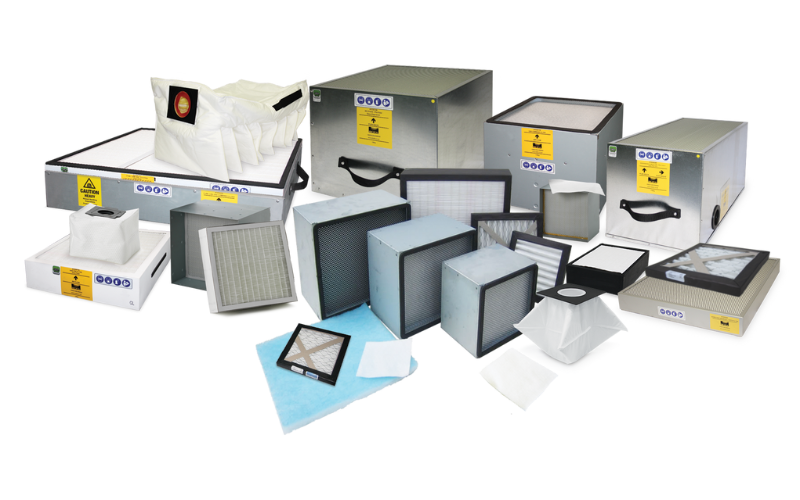
Our fume and particle extractors from the BOFA – Donaldson range are all fitted with filtration technology that combines the use of HEPA filters and activated carbon filters.
Understanding the difference between “absorption” and “adsorption”
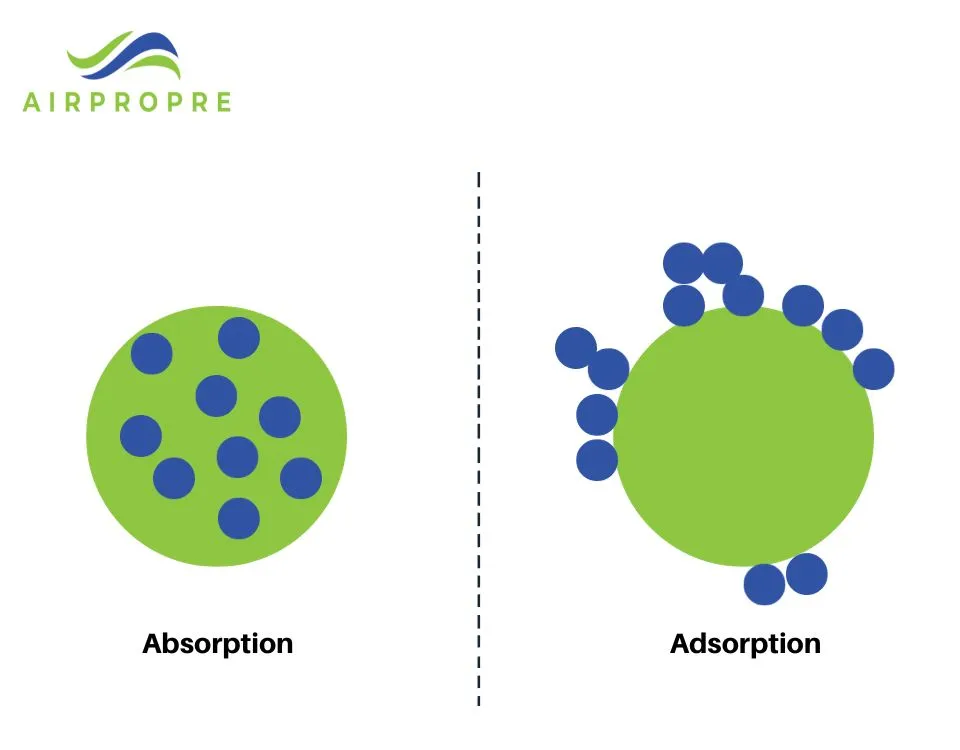
It is also essential to distinguish adsorption from absorption. These two processes are fundamentally different in their mechanism and effects. Absorption, in contrast to adsorption, is a process involving the incorporation of liquids or solids into a material. Absorption essentially involves the deep penetration or incorporation of the molecules of the absorbed substance into the structure of the absorbing material.
By contrast, adsorption is a surface phenomenon. It occurs when molecules or particles of gas or liquid are captured on the surface of a material, without penetrating deep into its structure. The adsorbent material often has active sites on its surface that attract and hold these molecules, thus creating an adsorbed layer. The main difference is that in adsorption, the molecules remain mainly on the surface of the material.
Why use an activated carbon filter?
Activated carbon filters offer a versatile solution for combating air pollution. They effectively capture a wide variety of pollutants and fine particles responsible for odours that are harmful to health. The air passing through the filter is purified of adsorbed gases. How long it remains effective depends on several factors, notably the humidity level, the ventilation speed, the nature of the pollutants, the size of the activated carbon grains and the number of filters used together. In short, the activated carbon filter is an essential tool for ensuring clean, healthy indoor air.
The benefits of activated carbon: an ally for air purification
Effective adsorption of volatile organic compounds (VOCs)
Activated carbon excels at adsorbing VOCs, including potentially harmful substances such as formaldehyde, benzene and other volatile chemical compounds. The microscopic pores of its porous structure act as traps, capturing these unwanted compounds on the surface of the material and thus ensuring effective air purification.
Filtration of fine particles and odours
In addition to VOCs, the activated carbon filter is effective at capturing fine particles and odours. Gas or liquid particles are captured on the surface of the material without penetrating deep into its structure, ensuring complete purification of indoor air.
Activation process for increased adsorption capacity
The high-temperature activation process modifies the porous structure of the activated carbon, thereby increasing its adsorption capacity. This modification optimises its efficiency in capturing pollutants, ensuring consistent performance over an extended period.
Versatile use in a variety of devices
Activated carbon filters are used in a variety of applications, including air purifiers, respiratory protection masks, and indoor air filtration and treatment systems. Their versatility makes them an ideal choice for different devices designed to improve air quality.
The main criteria to consider when choosing your carbon filter
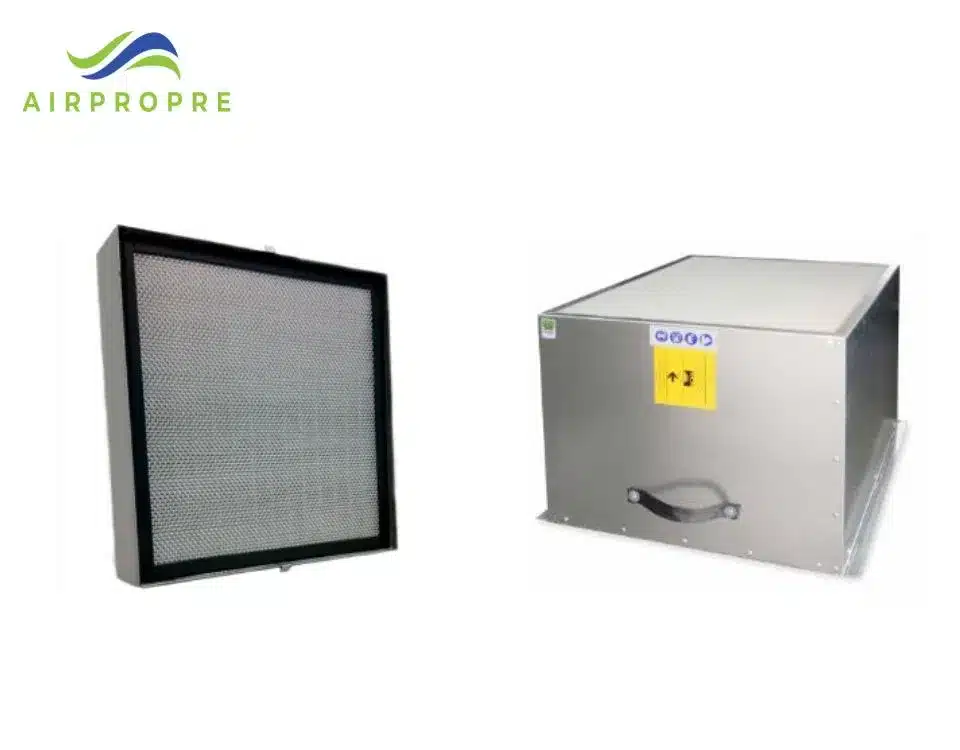
When selecting an activated carbon filter, several criteria are crucial to ensure optimal efficiency in purifying indoor air. It is essential to take these factors into account in order to make sure the filter meets the specific needs of the environment. Here are the main criteria to consider:
Type of target pollutants
Indeed, the choice of activated carbon filter must be matched to the specific types of pollutants present in the environment. Some filters specialise in capturing VOCs, while others excel at removing odours or fine particles. It is therefore essential to identify the predominant pollutants in order to choose a filter suited to those specific contaminants.
Filter size and shape
In addition, the size of the activated carbon filter must match the configuration of the filtration system or device in which it will be integrated. An unsuitable size can compromise the overall efficiency of the system. Moreover, the shape of the filter must be compatible with the available space, taking installation constraints into account.
Adsorption capacity
The adsorption capacity of the filter, determined by the amount of activated carbon it contains, is also a crucial criterion. An adequate capacity ensures long-lasting efficiency, reducing the frequency of replacement. It is important to choose a filter with sufficient capacity to handle the estimated volume of pollutants in the environment.
Filter service life
Finally, the service life of an activated carbon filter depends on various factors, notably the level of exposure to pollutants, the ventilation speed and the quality of the activated carbon used. Considering the filter’s estimated service life makes it possible to plan replacements proactively, thereby ensuring consistent performance of the air purification system.
Environmental conditions
Environmental conditions, such as humidity and temperature, can affect the efficiency of activated carbon. Some filters are specially designed to work in high-humidity environments. It is essential to choose a filter that suits the specific conditions of the location.